เชิงนามธรรม
The global hygiene product market presents a complex linguistic landscape, โดยเฉพาะอย่างยิ่งเกี่ยวกับเสื้อผ้าดูดซับแบบใช้แล้วทิ้งที่สวมใส่เช่นชุดชั้นใน. ผลิตภัณฑ์เหล่านี้, ที่รู้จักกันทั่วไปว่าเป็นกางเกงผ้าอ้อม, เรียกชื่อต่างๆ มากมาย, creating potential confusion for consumers, ผู้ดูแล, and international procurement managers. This variation in terminology is influenced by marketing strategies, regional dialects, the specific user (baby versus adult), and the intended application, from potty training to incontinence management. An analysis of the market reveals that terms such as "pull-ups," "training pants," "protective underwear," and "incontinence pants" are used interchangeably in some contexts yet hold distinct meanings in others. A precise understanding of this nomenclature is not merely an academic exercise; it is fundamental for effective communication in OEM/ODM partnerships, for accurate product specification, and for ensuring that the end-user receives a product that meets their functional and psychological needs for comfort, ศักดิ์ศรี, และใช้งานง่าย. This guide examines the common terminology, clarifies the distinctions, and provides a framework for navigating this varied lexicon.
ประเด็นสำคัญ
- The term "diaper pants" describes products worn like underwear, differing from tab-style diapers.
- สำหรับเด็กวัยหัดเดิน, common names include "training pants" and "pull-ups," emphasizing potty training.
- In the adult market, "protective underwear" or "incontinence pants" are preferred for dignity.
- Understanding what diaper pants are called in different regions is vital for global sourcing.
- Clear terminology prevents errors in OEM/ODM specifications and procurement.
- Material composition and fit are as important as the product's name for user satisfaction.
- Consulting with a specialized supplier clarifies regional naming conventions and product features.
สารบัญ
- The Core Distinction: Understanding Diaper Pants vs. ผ้าอ้อมแบบดั้งเดิม
- A Global Glossary: What Are Diaper Pants Called in the Baby and Toddler Market?
- Navigating the Adult Incontinence Market: A Lexicon for Dignity and Function
- Beyond the Name: Material and Structural Considerations for Procurement
- Strategic Sourcing: Aligning Terminology with Your Business Goals
- คำถามที่พบบ่อย
- บทสรุป
- การอ้างอิง
The Core Distinction: Understanding Diaper Pants vs. ผ้าอ้อมแบบดั้งเดิม
To grasp the subtleties of the language surrounding absorbent hygiene products, one must first appreciate the fundamental design divergence between a traditional, flat diaper with adhesive tabs and the modern diaper pant. This is not just a minor variation; it represents a philosophical shift in product design, moving from a passive application by a caregiver to a more active, user-centric experience. Think of it as the difference between being dressed and dressing oneself. The implications for user autonomy, ปลอบโยน, and the very act of changing are profound.
The Anatomy of a Traditional Diaper (กางเกงในสไตล์แท็บ)
The conventional disposable diaper, often called a "brief" in the adult market or simply a "nappy" in many parts of the world, is an open-style product. Its construction consists of an absorbent core sandwiched between a waterproof backsheet and a permeable topsheet. It is laid flat and secured around the wearer's waist using adhesive tabs or "tapes" that fasten at the front.
This design offers certain advantages. It allows for a highly adjustable fit, which can be beneficial for individuals who are bedridden or have limited mobility, as it can be changed without needing to remove clothing from the lower body. The open design can also accommodate a wider range of body shapes. ยัง, for an active toddler or a mobile adult, these very tabs can be a source of difficulty—they can be tricky to fasten on a moving target and can sometimes come undone.
The Innovation of Diaper Pants: Underwear-Like Design
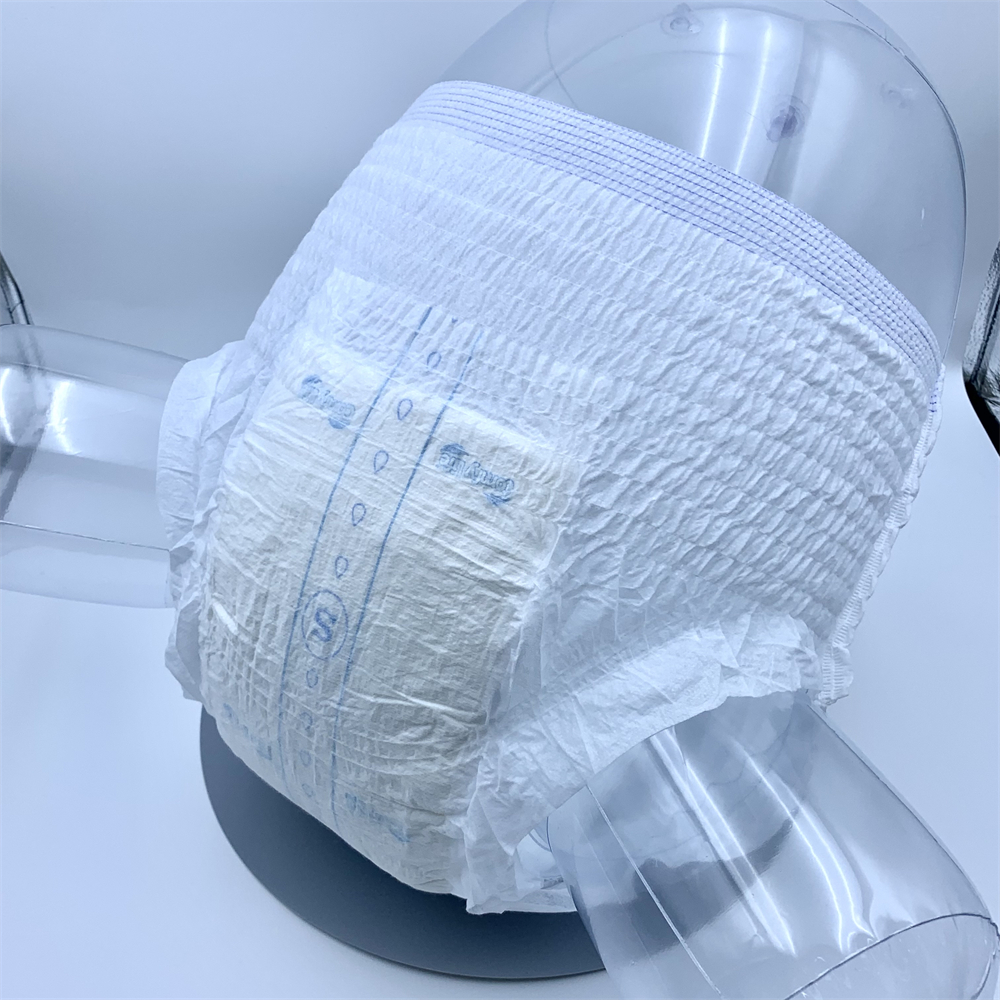
กางเกงผ้าอ้อม, ในทางตรงกันข้าม, are pre-closed garments. They feature a 360-degree elastic waistband and leg cuffs, creating a shape that mimics conventional underwear. They are pulled on and off just like regular pants, a simple action that carries immense psychological weight. For a child, this mimics the "big kid" underwear they aspire to wear. For an adult managing incontinence, it offers a level of discretion and normalcy that a tab-style brief may lack (Yiberodiaper.คอม, 2025). The design is inherently user-friendly for those who can stand, ส่งเสริมความเป็นอิสระ. สำหรับการกำจัด, most designs incorporate tear-away side seams, allowing for a clean and easy change when soiled, combining the convenience of a pull-on with the practicality of a tab-style diaper for disposal.
Key Functional Differences for Wearers and Caregivers
The choice between these two styles is often dictated by the user's mobility and developmental stage. A caregiver for a newborn will almost certainly prefer the ease of a tab-style diaper. But once that baby becomes a wriggling, คลาน, and eventually walking toddler, the equation changes. The struggle to keep a child still to fasten tapes makes the pull-on style exponentially more attractive. The same logic applies to the adult market. While a caregiver in a clinical setting might need tab-style briefs for non-ambulatory patients (รีเจนซี่ HCS, 2025), a community-dwelling adult managing light to moderate incontinence will likely prefer the dignity and ease of a product that feels like their own underwear.
| คุณสมบัติ | Traditional Diaper (Tab-Style Brief) | Diaper Pant (สไตล์แบบสวม) |
|---|---|---|
| แอปพลิเคชัน | Secured with adhesive tabs at the front | Pulled on and off like underwear |
| ผู้ใช้หลัก | Newborns, non-ambulatory individuals | Active toddlers, mobile adults |
| พอดี | Highly adjustable via refastenable tabs | Conforming fit with a 360° elastic waistband |
| การกำจัด | แท็บไม่อดอาหาร | Pulled down or torn at the side seams |
| Promotes | Ease of changing for a caregiver | User independence and discretion |
| Common Names | ผ้าอ้อม, ผ้าอ้อม, กางเกงชั้นในสำหรับผู้ใหญ่ | พูลอัพ, กางเกงเทรนนิ่ง, ชุดชั้นในป้องกัน |
A Global Glossary: What Are Diaper Pants Called in the Baby and Toddler Market?
When a child begins to show signs of readiness for potty training, the language used for their absorbent products often shifts. This is a deliberate marketing and psychological strategy. คำถาม, "What are diaper pants called?" becomes particularly relevant here, as the name itself is part of the developmental journey. The product is no longer just for containment; it is a tool for learning.
"Pull-Ups" and "Training Pants": The Transition to Potty Training
Perhaps the most famous term in the United States and several other Western markets is "Pull-Ups," which is technically a brand name owned by Kimberly-Clark. Much like "Kleenex" for tissues, its market dominance has turned it into a genericized trademark. The term powerfully communicates the product's function—it is pulled up, empowering the child.
"Training pants" is the more generic equivalent and is used globally. This term frames the product as a transitional item. It suggests a temporary phase between diapers and underwear. Many training pants are designed with features that support this learning process, such as wetness indicators that fade or designs that provide a brief, cool sensation upon wetting to help the child recognize their body's signals. The name itself is a tool for parents to encourage their children, marking a step towards independence.
"Diaper Pants": A General Term for Easy Changes
In many markets, especially across Asia and parts of Europe, the term "diaper pants" or "pant-style diapers" is common. This name is more functional and less focused on the potty-training narrative. It simply describes the product's form factor. This terminology is often preferred for babies and younger toddlers who are not yet potty training but are very active. For parents of these "movers," the primary benefit is not training but the sheer convenience of a quick, standing change. Trying to fasten a traditional diaper on a toddler who would rather be exploring is a universal challenge, and the diaper pant is the direct solution.
Regional Nuances: What to Expect in European vs. Asian Markets
Navigating international procurement requires an awareness of these regional preferences. ในหลายประเทศในยุโรป, you might find terms like "pants" or "slips" (from the French). In Russia and surrounding regions, the term "трусики-подгузники" (trusiki-podguzniki), which translates to "panties-diapers," is descriptive and widely understood.
In Southeast Asian markets, English terms like "diaper pants" are prevalent, but local language equivalents are also used. A supplier's familiarity with these regional terms is a strong indicator of their global experience. เมื่อจัดหาสินค้า, specifying "pant-style diaper for toddlers" is clearer than using a brand name like "Pull-Ups," which may not be universally understood or could carry intellectual property implications.
Navigating the Adult Incontinence Market: A Lexicon for Dignity and Function
The language surrounding adult absorbent products is arguably more sensitive and carries greater emotional weight. For an adult experiencing incontinence, the terminology can either reinforce a sense of being a patient or support their identity as a capable, independent person. Answering "What are diaper pants called for adults?" requires a deep sense of empathy. The industry has largely moved away from the term "adult diapers," especially for pull-on styles, in favor of language that prioritizes discretion and normalcy.
"Adult Pull-Ups" or "Protective Underwear": The Most Common Terms
"Protective underwear" is perhaps the most widely accepted and respectful term in the consumer-facing adult market, particularly in North America and Europe. It avoids the clinical or infantilizing connotations of "diaper" and instead emphasizes the product's function: การป้องกัน. It sounds like a practical garment choice, not a medical device. เฮ้ เมด ซัพพลาย (2025) notes that these products are designed for adults with active lifestyles, seeking confidence and peace of mind.
"Adult pull-ups" is also frequently used, borrowing the familiar term from the children's market to describe the pull-on functionality. While common, some may find it slightly less discreet than "protective underwear." The choice between these terms in marketing often reflects a brand's desired positioning—one leans into function, the other into a lifestyle-oriented feel.
"Incontinence Pants": A Clinical and Discreet Alternative
In the United Kingdom, other parts of Europe, and in many medical settings, the term "incontinence pants" is standard. It is direct, clinical, and descriptive. It clearly states the condition the product is designed to manage. While it may be less consumer-friendly in some cultures, it is precise and leaves no room for ambiguity in a professional healthcare or procurement context. When communicating with a supplier about products intended for pharmacies, โรงพยาบาล, or care homes, "incontinence pants" is an effective and universally understood term. ผู้ผลิตหลายราย, including those offering กางเกงผ้าอ้อมสำหรับผู้ใหญ่, categorize their products this way for clarity in their catalogs.
"Absorbent Underwear": Focusing on Function Over Form
A slightly different, function-forward term is "absorbent underwear." This name strips away all other connotations and focuses on the product's core purpose: to absorb moisture while being worn like underwear. It is a neutral, factual descriptor that can be appealing in its simplicity. It is often used for products designed for lighter incontinence, where the look and feel are almost indistinguishable from regular underwear.
| Terminology | Primary Market/Context | Connotation/User Focus |
|---|---|---|
| ชุดชั้นในป้องกัน | Consumer (ทวีปอเมริกาเหนือ, ยุโรป) | ดุลยพินิจ, normalcy, วิถีชีวิตที่กระตือรือร้น |
| พูลอัพสำหรับผู้ใหญ่ | Consumer (ทั่วโลก) | ฟังก์ชั่นการทำงาน, ใช้งานง่าย (ดึงขึ้น) |
| Incontinence Pants | Medical/Clinical, UK/Europe | Clinical precision, condition management |
| Absorbent Underwear | Consumer (ทั่วโลก) | ฟังก์ชั่นการทำงาน, simplicity, often for lighter needs |
Beyond the Name: Material and Structural Considerations for Procurement
While the name is what gets a customer's attention, the materials and construction are what determine performance and user satisfaction. A deep understanding of what constitutes a high-quality diaper pant is essential for any buyer or product developer. The internal structure is a marvel of materials science, designed to acquire, แจกจ่าย, and lock away fluid while keeping the wearer's skin dry and healthy.
บทบาทของพอลิเมอร์ดูดซับยิ่งยวด (เอสเอพี) in Modern Diaper Pants
At the heart of every modern disposable diaper or diaper pant is the absorbent core. This core is typically a blend of fluff pulp (for initial fluid acquisition and distribution) and Superabsorbent Polymer (เอสเอพี). SAP is an incredible material, capable of absorbing and retaining many times its own weight in liquid, เปลี่ยนให้เป็นเจลที่คงตัว.
When specifying a product, the amount of SAP, its quality, and its placement within the core are critical variables. A higher SAP content generally means higher absorbency, making a product suitable for overnight use or heavy incontinence. The question is not just how much SAP, but what kind. Different SAPs have different absorption speeds and retention capacities under pressure. A reliable manufacturer can guide you on the optimal SAP blend for your target performance level and price point.
Breathability and Skin Health: Non-Woven Fabrics and Their Importance
The layer that sits against the skin (the topsheet) and the outer layer (แผ่นหลัง) are just as important as the core. The topsheet must be soft, สะดวกสบาย, and hydrophilic, allowing liquid to pass through it quickly into the absorbent core while remaining dry to the touch.
แผ่นหลัง, while waterproof, must also be breathable. Modern diaper pants use cloth-like, non-woven backsheets with microscopic pores that allow air and water vapor to escape but are too small for liquid water to pass through. This breathability is crucial for maintaining skin health, as it reduces heat and humidity buildup, lowering the risk of diaper rash and skin irritation. เมื่อจัดหาสินค้า, always inquire about the breathability of the backsheet, often measured in grams per square meter per day (g/m²/24h).
ความยืดหยุ่นและความพอดี: The Engineering Behind a 360-Degree Waistband
The defining feature of a diaper pant is its elastic waistband. This is not simply a piece of elastic; it is an engineered system. It typically involves multiple strands of elastic material (like Lycra) threaded through soft, ผ้าไม่ทอ. The goal is to provide a snug, secure fit that prevents leaks without pinching or leaving red marks on the skin. The elasticity must be consistent and gentle, adapting to the wearer's movements. The quality of the elastic threads and the method of their bonding to the non-woven material directly impact the product's comfort, พอดี, และความน่าเชื่อถือ.
Strategic Sourcing: Aligning Terminology with Your Business Goals
For a business involved in the distribution, การสร้างแบรนด์, or retail of hygiene products, mastering this terminology is a strategic imperative. Miscommunication can lead to incorrect orders, mismatched products, และในที่สุด, dissatisfied customers. Whether you are developing a new private label product or sourcing for a large healthcare system, clarity is paramount.
Why Precise Language Matters in Product Specification Sheets
When creating a product specification sheet for an OEM (ผู้ผลิตอุปกรณ์ดั้งเดิม) หรือโอเอ็มเอ็ม (ผู้ผลิตการออกแบบดั้งเดิม) project, ambiguity is your enemy. Simply writing "adult diaper" is insufficient. You must specify:
- สไตล์: Pant-style (ดึงขึ้น) or Brief-style (tab-fastener).
- Target User: Toddler training pant or adult incontinence pant.
- ระดับการดูดซึม: แสงสว่าง, ปานกลาง, หนัก, หรือข้ามคืน (often specified in milliliters).
- การปรับขนาด: Clear waist/hip measurements for each size (ส, ม, แอล, XL).
- คุณสมบัติ: Breathable backsheet, ตัวบ่งชี้ความเปียกชื้น, ด้านฉีกขาด, 360° elastic waistband.
Using the precise terminology discussed throughout this guide—"training pants" if you want features for potty learning, "protective underwear" for a discreet adult product—ensures the manufacturer understands the exact product you intend to create.
Communicating with Your Supplier: Best Practices for Clarity
When you engage with a potential supplier, begin the conversation with clear definitions. You might ask, "We are looking to source what we call 'adult protective underwear.' For you, does this term refer to a pant-style product for mobile users?" This simple clarifying question can prevent significant misunderstandings down the line.
A knowledgeable supplier will not only understand the terms but will also be able to discuss the regional preferences of the markets you intend to serve. They can act as a valuable consultant, advising on whether "diaper pants" or "training pants" will resonate better with your target customers in Southeast Asia, ตัวอย่างเช่น. Partnering with a comprehensive บริการจัดซื้อผ้าอ้อมแบบครบวงจร can be particularly advantageous, as such enterprises possess the integrated knowledge of R&ง, การผลิต, and global sales to guide you effectively.
Customization Opportunities: From Absorbency Levels to Branded Packaging
Once you and your supplier are speaking the same language, the possibilities for customization open up. You can work together to fine-tune every aspect of the product. This includes adjusting the SAP-to-pulp ratio for a specific absorbency target, selecting a softer non-woven material for a premium feel, or designing unique, attractive packaging that reflects your brand's identity. ตัวอย่างเช่น, the trend toward cute adult diapers shows that aesthetics can be as important as function for some user segments (Yiberodiaper.คอม, 2025). This level of collaboration is only possible when the foundational communication about the product type is crystal clear from the very beginning.
คำถามที่พบบ่อย
1. What is the main difference between diaper pants and regular diapers? The primary difference is the design and application. Regular diapers are open-style and secured with adhesive tabs at the waist. Diaper pants are a closed, underwear-style design with a 360° elastic waistband that is pulled on and off, promoting user independence.
2. Are "pull-ups" the same as "diaper pants"? "Pull-Ups" is a specific brand name for a type of children's training pant. The term has become a common way to refer to any pull-on style diaper for toddlers. "Diaper pants" is a more generic, functional term that describes the product's form factor and can apply to products for both babies and adults.
3. What are adult diaper pants called for medical purposes? In medical or clinical settings, the most common term is "incontinence pants." This terminology is direct, professional, and clearly communicates the product's purpose for managing incontinence, avoiding the more consumer-focused language like "protective underwear."
4. Can diaper pants be used for overnight protection? ใช่, many manufacturers offer diaper pants specifically designed for overnight use. These products feature a higher absorbency level, typically achieved through a greater quantity of Superabsorbent Polymer (เอสเอพี) in the core, to provide extended protection for 8-12 ชั่วโมง.
5. How do I choose the right size of diaper pants? Sizing is crucial for leak prevention and comfort. It is based on the wearer's waist and hip measurements, ไม่ใช่แค่น้ำหนัก. Always refer to the manufacturer's sizing chart on the packaging and choose the size that corresponds to the wearer's measurements for a snug but comfortable fit.
6. Why is there so much variation in the names for diaper pants? The variation stems from marketing strategies, บรรทัดฐานทางวัฒนธรรม, and the specific user. "Training pants" creates a psychological milestone for children. "Protective underwear" offers dignity to adults. "Diaper pants" is a functional descriptor. This diversity in naming allows brands to connect with different user needs and sensibilities across the globe.
บทสรุป
The question "what are diaper pants called?" opens a window into the intersection of product design, marketing psychology, and cultural sensitivity. The answer is not a single term but a lexicon of names, each with its own context and connotation. From "training pants" that empower a toddler to "protective underwear" that affords an adult dignity, the language we use matters. For businesses operating in the global hygiene market, mastering this vocabulary is not optional; it is fundamental to successful product development, strategic sourcing, and clear communication. By understanding the distinctions between tab-style briefs and pull-on pants, and by appreciating the nuanced terminology used for babies and adults in different regions, companies can ensure they are sourcing and selling the right product, meeting the precise needs of their customers with confidence and clarity.
การอ้างอิง
เฮ้ เมด ซัพพลาย. (2025). คู่มือที่ดีที่สุดสำหรับผ้าอ้อมผู้ใหญ่: ปลอบโยน, พอดี, และความมั่นใจ. สืบค้นจาก
อีโคแคร์ ใหม่. (2025). Understanding OEM baby diapers: โครงสร้าง, วัสดุ, market trends, and health considerations. สืบค้นจาก
รีเจนซี่ HCS. (2025). คู่มือผ้าอ้อมผู้ใหญ่. สืบค้นจาก https://www.regencyhcs.com/blog/adult-diapering-guide
Tianjiao Diapers. (2025). Which type of diaper is best for adults? สืบค้นจาก https://www.tianjiaodiapers.com/which-type-of-adult-diaper-is-best-for-your-needs
ยิเบโร. (2023). คำอธิบายโดยละเอียดเกี่ยวกับโครงสร้างและวัตถุดิบของผ้าอ้อม. สืบค้นจาก https://www.yiberodiaper.com/a-detailed-explanation-of-the-structure-and-raw-materials-of-diapers/
ยิเบโร. (2025). ผ้าอ้อมผู้ใหญ่น่ารักเพื่อความสบายและมีสไตล์สำหรับทุกวัย. สืบค้นจาก https://www.yiberodiaper.com/cute-adult-diapers-for-comfort-and-style-for-all-ages/
ยิเบโร. (2025). กางเกงผ้าอ้อม กับ กางเกงผ้าอ้อม ต่างกันอย่างไร??. สืบค้นจาก https://www.yiberodiaper.com/what-is-the-difference-between-diaper-and-diaper-pants/


