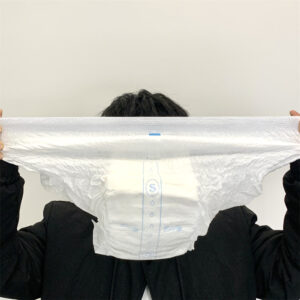
Abstract
Selecting the appropriate size of adult pull-up underwear is a foundational element in managing incontinence effectively, directly impacting user comfort, dignidad, and skin integrity. This process extends beyond a simple waist measurement, involving a nuanced assessment of body shape, the specific type and level of incontinence, and the user’s mobility and lifestyle. An improper fit can lead to significant functional failures, such as leakage, or cause physical harm, including skin chafing and pressure sores. This guide examines the multifaceted approach required to determine the correct size. It deconstructs the process into five distinct stages: understanding individual needs, mastering accurate measurement techniques, interpreting global sizing standards, selecting appropriate product features, and implementing a testing protocol for verification. By integrating principles from material science, human anatomy, and gerontology, this analysis provides users and caregivers with a comprehensive framework for making an informed decision, thereby enhancing the efficacy of incontinence management and improving the quality of life for the individual.
Key Takeaways
- Measure both hip and waist circumferences, then use the larger of the two numbers.
- Consult the manufacturer’s specific sizing chart, as brand sizes are not standardized.
- Consider absorbency levels; nighttime or heavy incontinence requires a higher capacity.
- The question of what size pull ups for adults to choose depends on your body shape and mobility.
- A proper fit prevents leaks by ensuring leg cuffs and the waistband are snug but not tight.
- Always test a new size or brand with a small sample pack before purchasing in bulk.
- Look for signs of a poor fit like red marks, chafing, or frequent leaks.
Table of Contents
- Step 1: A Deeper Understanding of Your Personal Needs
- Step 2: The Art and Science of Achieving Accurate Body Measurements
- Step 3: Decoding Sizing Charts Across Global Markets
- Step 4: Selecting the Optimal Product Type and Absorbency Level
- Step 5: The Final Check—Testing, Adjusting, and Ensuring a Perfect Fit
- FAQ
- Conclusion
- References
Step 1: A Deeper Understanding of Your Personal Needs
The path to finding the right incontinence product begins not with a measuring tape, but with a moment of introspection. The question of what size pull ups for adults to choose is interwoven with a much broader tapestry of personal circumstances. To select a product that truly serves its purpose—providing security, aliw, and dignity—one must first develop a clear picture of the specific challenges and requirements at hand. This initial step is an exercise in self-awareness, an empathetic inventory of your body’s signals and your daily life’s demands. It is about moving beyond a generic solution and towards a personalized strategy for care.
Identifying the Type and Severity of Incontinence
Incontinence is not a monolithic condition; it manifests in various forms, each with distinct implications for product selection. Understanding which type you or your loved one is experiencing is the first pillar of making an informed choice.
- Stress Incontinence: This occurs when physical pressure is exerted on the bladder, leading to small to moderate leaks. Activities like coughing, sneezing, laughing, or lifting heavy objects can trigger it. For individuals with stress incontinence, a lighter absorbency pull-up may suffice for daily activities, providing discreet protection without unnecessary bulk. The primary concern is rapid absorption of sudden, small gushes.
- Urge Incontinence: Often associated with an overactive bladder (OAB), this type is characterized by a sudden, intense urge to urinate, followed by an involuntary loss of urine. The volume can range from small to a complete emptying of the bladder. Here, the need shifts towards a product with a fast-absorbing core that can handle larger, more sudden voids. The psychological comfort of knowing the product can manage a full event is paramount.
- Overflow Incontinence: This happens when the bladder doesn’t empty completely, leading to frequent or constant dribbling of urine. It feels as though the bladder is always full. The requirement here is for a product with sustained absorbency and excellent moisture-wicking properties to keep the skin dry over long periods of constant, light exposure to moisture.
- Functional Incontinence: This form is not caused by a bladder problem, but by physical or cognitive impairments that prevent a person from reaching the toilet in time. This could be due to mobility issues from arthritis, the cognitive decline associated with dementia, or other neurological conditions. For these individuals, the ease of use becomes a major factor. Pull-up style underwear is often ideal as it can be managed more easily than tab-style briefs, promoting independence. The absorbency level needed will depend on whether the issue is reaching the toilet just a little too late or managing full voids.
Assessing Absorbency Needs: Day versus Night
The body’s rhythms and our daily schedules dictate that a single absorbency level is rarely sufficient. The demands of daytime activity are vastly different from the requirements of an uninterrupted night’s sleep.
During the day, individuals are typically more active and have regular access to restrooms. The focus is often on discretion, aliw, and mobility. A pull-up that is less bulky allows for normal movement and fits smoothly under clothing, reducing self-consciousness. Absorbency needs might be moderate, intended to handle occasional leaks between toilet visits.
Nighttime, however, presents a different challenge. The goal is to achieve 8-10 hours of uninterrupted sleep without leaks that can disrupt rest and create extra laundry. This calls for a product with maximum absorbency. Nighttime pull-ups are specifically designed with a larger absorbent core, often with more superabsorbent polymer (SAP) concentrated in key areas. They are built to handle multiple voids and to hold a significantly larger volume of liquid while keeping the skin dry to prevent irritation and breakdown. Answering what size pull ups for adults to get for nighttime use often involves prioritizing absorbency and leak protection over slimness.
Considering Mobility and Lifestyle
A person’s level of activity is a determinant in choosing the right style and fit of an incontinence product.
Someone who is active, mobile, and living independently will likely prefer the dignity and normalcy of pull-up style underwear. These products are put on and taken off just like regular underwear, promoting a sense of autonomy. The fit must be secure enough to move with the body without shifting or causing friction, and the materials must be breathable to manage sweat and heat during physical activity.
Conversely, for an individual who is bedridden or has very limited mobility, different factors come into play. While pull-ups can still be an option, tab-style briefs might be more practical for caregivers. These can be changed without requiring the person to fully undress or stand, simplifying the process for both the wearer and the caregiver. The fit for a sedentary person must be carefully managed to prevent pressure sores, especially around the hips and sacral area. The material must be exceptionally soft, and the fit should be snug but not restrictive, ensuring air can still circulate to the skin.
By thoughtfully considering these three dimensions—the type of incontinence, the differing needs of day and night, and the user’s mobility—you create a detailed personal profile. This profile is the foundation upon which all subsequent decisions about what size pull ups for adults to select will be built. It transforms the task from a simple measurement into a holistic assessment of well-being.
Step 2: The Art and Science of Achieving Accurate Body Measurements
After developing a nuanced understanding of your personal needs, the next practical step is to obtain precise body measurements. This stage might seem straightforward, but it is a common point of error that leads to poor product performance. An ill-fitting pull-up is not merely an inconvenience; it is a direct cause of leakage, skin irritation, and emotional distress. Think of this process as being fitted for a bespoke garment. Just as a tailor requires exact dimensions to craft a perfectly fitting suit, you need accurate numbers to select a product that will feel and function as if it were made for you. This is where the science of measurement meets the art of understanding the human form.
The Essential Tools and Preparation
Before you begin, gather the right tool. The ideal instrument is a soft, flexible measuring tape, the kind used for sewing. A rigid metal tape measure from a toolbox will not conform to the body’s curves and will yield inaccurate results. If you don’t have a flexible tape, you can use a non-stretchy piece of string or ribbon and then measure it against a ruler.
For the most accurate reading, measurements should be taken against bare skin or over a single, thin layer of undergarments. Measuring over bulky clothing like sweatpants or jeans will add inches and lead you to select a size that is too large, compromising the fit. Ensure the person being measured is standing in a relaxed, natural posture, with their feet slightly apart and weight distributed evenly. If the person is unable to stand, measurements can be taken while they are lying flat on their back.
Measuring the Waist and Hips: The Two-Point Method
Most people assume that “waist size” is the only number that matters. This is a critical oversimplification. The human body is not a perfect cylinder, and the relationship between the waist and hips varies dramatically from person to person. A secure fit depends on the product’s ability to accommodate the widest part of the lower torso. Kaya nga, you must measure two key points:
- Measuring the Waist: Locate the natural waistline. This is not necessarily where the waistband of your pants sits. The natural waist is the narrowest part of your torso, typically an inch or so above the belly button. Wrap the measuring tape around this point. It should be snug but not tight. You should be able to slip one finger comfortably between the tape and the skin. Ensure the tape is level all the way around—it shouldn’t dip or rise in the back. Record this number.
- Measuring the Hips: Identify the fullest part of the hips and buttocks. This is usually about 7-9 inches below the natural waist. Again, wrap the tape measure around this circumference, keeping it parallel to the floor. This measurement is often the most important one for what size pull ups for adults to select, as the product must be able to stretch over the hips to be pulled on. Record this number.
The Golden Rule: Use the Larger Measurement
Once you have both your waist and hip measurements, compare the two. Ang “golden rule” of sizing incontinence products is to use the larger of these two numbers to guide your selection on the manufacturer’s sizing chart.
Why is this so important? Let’s consider two common body shapes. A person with an “apple” shape may have a wider waist and narrower hips. If they were to choose a size based only on their hip measurement, the pull-up would be too tight and constricting at the waist. Conversely, a person with a “pear” shape has a smaller waist and wider hips. If they used only their waist measurement, they would not be able to pull the product up over their hips, or if they managed to, it would be stretched so tightly that the absorbent core would be distorted and the leg elastics would be ineffective.
By using the larger of the two measurements, you ensure the product can be pulled on comfortably and that it will properly encircle the widest part of your lower body, which is the anchor for a secure fit.
A Table for Understanding Measurement and Fit
To further clarify, consider the following scenarios which illustrate the importance of the two-point method.
| Scenario | Waist Measurement | Hip Measurement | Measurement to Use | Potential Outcome if Wrong Measurement is Used |
|---|---|---|---|---|
| A: Wider Hips | 34 inches (86 cm) | 40 inches (102 cm) | 40 inches (102 cm) | Using 34″ would result in a product that cannot be pulled up over the hips or is too tight. |
| B: Wider Waist | 48 inches (122 cm) | 44 inches (112 cm) | 48 inches (122 cm) | Using 44″ would make the waistband uncomfortably tight, causing red marks and potential leaks. |
| C: Similar Measures | 38 inches (97 cm) | 39 inches (99 cm) | 39 inches (99 cm) | Using either measurement would likely lead to a similar size, but using the larger is the safest practice. |
This methodical approach to measurement removes the guesswork from the process. It is a simple yet profoundly effective technique for getting one step closer to finding a product that provides reliable protection. Mastering this step is fundamental before you can effectively interpret the sizing charts provided by various manufacturers.
Step 3: Decoding Sizing Charts Across Global Markets
Having armed yourself with accurate body measurements, you are now prepared to engage with the most confusing part of the process: the sizing chart. The central challenge here is the complete lack of a universal, standardized sizing system for adult incontinence products. Each brand, each manufacturer, and each region of the world seems to have its own interpretation of what constitutes a “Medium,” “Large,” o “Extra Large.” This is not like buying a t-shirt. The stakes are higher, and the variations are wider. Successfully navigating this landscape requires a global perspective and a meticulous, brand-by-brand approach. Understanding what size pull ups for adults to choose means becoming a student of these regional and corporate idiosyncrasies.
The Regional Divide: Inches vs. Centimeters
The most immediate difference you will encounter is the unit of measurement. This generally follows a divide between the United States and the rest of the world.
- USA Market: Sizing is almost exclusively based on inches (“). Brands marketing to American consumers will provide waist/hip ranges in inches, tulad ng “34-44 inches.”
- European and Asian Markets: The metric system reigns. Sizing charts in Europe, Russia, the Middle East, and most of Southeast Asia will be in centimeters (cm). A comparable size might be listed as “85-115 cm.”
It is absolutely vital to pay attention to the unit being used. A simple conversion error can lead you to choose a product that is drastically too large or too small. As a quick reference, 1 inch is equal to 2.54 centimeters. If you are shopping from an international supplier, always have a converter handy or do the simple math to ensure you are comparing apples to apples.
Comparison of Sizing Conventions: A General Guide
While brand-specific charts are the ultimate authority, we can establish a general comparison to understand the typical sizing landscape. The table below offers an approximate correlation between common size labels and their corresponding measurement ranges in different regions. This is a generalized guide only; always defer to the specific product’s chart.
| Common Size Label | Typical USA Range (Inches) | Typical EU/Asia Range (cm) | General Notes |
|---|---|---|---|
| Small (S) | 22″ – 36″ | 55 cm – 90 cm | Designed for very petite or slim adults. |
| Medium (M) | 32″ – 44″ | 80 cm – 110 cm | One of the most common sizes, but with significant brand variation. |
| Large (L) | 40″ – 58″ | 100 cm – 145 cm | The overlap between Medium and Large is often where fit issues arise. |
| Extra Large (XL) | 56″ – 68″ | 140 cm – 170 cm | Intended for larger individuals; check for generous leg openings. |
| Bariatric (XXL+) | 65″ – 90″+ | 165 cm – 230 cm+ | Specialized sizes for bariatric patients, offering the largest dimensions. |
Notice the significant overlap between sizes. For example, a person with a 42-inch measurement could fall into either a Medium or a Large category depending on the brand. This is precisely why relying on the label “Medium” is not enough.
The Brand Is the Standard: A Call for Diligence
Imagine two different clothing brands. You might be a size 12 in one brand of jeans and a size 14 in another. The same principle applies with even greater force to incontinence products. One brand’s “Large” might start at 40 inches, while another’s begins at 45 inches.
This variation stems from differences in design philosophy, material elasticity, and intended fit. Some brands design for a very snug, athletic fit, while others prioritize a looser, more comfortable feel. This is why, after determining your measurement, the next step is to locate the specific sizing chart for the exact product you are considering. This chart is usually found on the side or back of the product packaging or on the product page of the online retailer.
When examining the chart, look for where your measurement (the larger of your waist/hip numbers) falls within the provided ranges.
- If your measurement is near the middle of a range: This is the ideal scenario. For example, if your measurement is 48 inches and the “Large” size is listed as 44-58 inches, it is very likely to be a good fit.
- If your measurement is at the low end of a range: Let’s say your measurement is 45 inches and the “Large” ay 44-58 inches. This size may work, but it could be slightly loose, especially around the legs. You might consider also trying the largest size in the next category down (e.g., a “Medium” that goes up to 44 inches) to see which provides a more secure seal.
- If your measurement is at the high end of a range: If your measurement is 57 inches and the “Large” ay 44-58 inches, the product may be too tight. It could feel restrictive, dig into the skin, or stretch the absorbent core too much, reducing its effectiveness. In this case, it is almost always better to size up to the next category (e.g., isang “Extra Large” that starts at 56 inches). A slightly loose fit is manageable, but a product that is too tight is unusable and unsafe.
Finding the answer to what size pull ups for adults to buy is an iterative process. It requires you to act like a detective, gathering clues from your own body and then carefully matching them to the evidence provided on the product packaging. Do not assume consistency. Trust the tape measure and the brand’s chart above all else.
Step 4: Selecting the Optimal Product Type and Absorbency Level
With your accurate measurement in hand and a keen understanding of how to interpret sizing charts, the next layer of decision-making involves the product’s internal architecture. Ang “laki ng” of a pull-up is more than just its physical dimensions; it is also about its capacity and construction. Choosing the right product involves matching the external fit to the internal function. This means delving into the materials and design features that differentiate a light-daytime product from a maximum-security-nighttime one. A well-fitting pull-up with the wrong absorbency level is just as ineffective as a high-absorbency product in the wrong size.
The Spectrum of Absorbency
Manufacturers offer a range of absorbency levels to cater to the different types of incontinence we discussed in Step 1. These levels are not standardized, but they generally follow a pattern from light to maximum or overnight.
- Light/Moderate Absorbency: These are the slimmest and most discreet products. They are designed for stress incontinence or light urge episodes. The absorbent core is thinner, making them comfortable for active daytime use under regular clothing. They are suitable for people who can still use the toilet but need a backup for small leaks.
- Heavy/Super Absorbency: This is the workhorse category for many users. These pull-ups offer a balance of significant protection and reasonable comfort. They are intended for individuals with more pronounced urge or overflow incontinence who may experience larger voids. The core is thicker and contains more superabsorbent polymer (SAP), the material responsible for locking away liquid. This is a common choice for daily wear for those needing reliable security.
- Maximum/Overnight Absorbency: These products represent the pinnacle of protection. They are engineered for extended wear, particularly through the night, or for individuals with heavy to total incontinence. The features of an overnight product are distinct:
- Higher Capacity: They can often hold over a liter of fluid.
- Advanced Core: The SAP is more plentiful and strategically placed for when the user is lying down.
- Taller Leak Guards: The inner cuffs that surround the leg openings are higher to create a stronger barrier against leaks.
- Fuller Coverage: The overall chassis of the pull-up is larger, with more material in the front and rear for added security in different sleeping positions.
The question of what size pull ups for adults is right for you is directly linked to absorbency. A higher absorbency product will inherently be bulkier. You must find the equilibrium between the protection you need and the discretion you desire.
Understanding Product Construction: More Than Just a Pad
The modern disposable pull-up is a marvel of material science, a layered system designed for containment, aliw, and skin health. Understanding its components can help you appreciate the differences between high-quality and low-quality options.
- Topsheet: This is the layer that rests directly against the skin. Premium products use soft, cloth-like, non-woven materials designed to be gentle and to allow liquid to pass through quickly into the core. Some topsheets are treated with aloe, vitamin E, or other skin conditioners. Breathability in this layer is key to preventing heat rash and irritation.
- Acquisition/Distribution Layer: Situated just below the topsheet, this is a thin, often blue or green, layer. Its job is to rapidly pull moisture away from the topsheet and spread it across the wider surface of the absorbent core. This prevents “pooling” in one spot and allows the entire core to be utilized, improving overall capacity and skin dryness.
- Absorbent Core: This is the heart of the product. It is typically a mixture of “fluff pulp” (pulverized wood pulp) and superabsorbent polymer (SAP). As noted by researchers, SAPs are tiny crystals that can absorb and retain hundreds of times their weight in liquid, turning it into a gel (Alhogbi, 2022). The ratio of SAP to fluff pulp often determines the product’s absorbency and thinness. Higher SAP content allows for a thinner but more absorbent product. A quality core resists clumping or breaking apart when wet.
- Backsheet: This is the waterproof outer layer. In the past, this was often a noisy, plastic-like material. Today, most pull-ups use a quieter, more comfortable “cloth-like” backsheet. While it feels like fabric, it has a waterproof film to prevent any liquid from escaping. Breathable backsheets allow air and water vapor to escape, which helps keep the skin cooler and drier, reducing the risk of dermatitis. You can even find a wide selection of adult pull ups and other hygiene products from reliable suppliers.
- Standing Leak Guards (Leg Cuffs): These are the elasticized cuffs that channel moisture towards the core. A good fit here is just as important as the waist fit. They should sit comfortably in the leg creases (the bikini line) without gaps.
Pull-Ups vs. Tab-Style Briefs: A Functional Choice
While our focus is on pull-ups, it’s worth noting when an alternative style might be more appropriate.
- Pull-Up Style Underwear: Best for active, mobile individuals who can stand and manage their own dressing. They offer dignity and a sense of normalcy. They are less suitable for those who are bedbound, as changing them requires removing pants and shoes.
- Tab-Style Briefs (Mga Diaper ng Matanda): These are secured with adhesive tabs on the sides. They are the preferred choice for caregivers assisting someone with very limited mobility. They can be changed while the person is lying down or sitting, making the process much easier and more dignified for the user. They also allow for a more adjustable and customized fit, as the tabs can be refastened to be tighter or looser.
Making the right choice in this step involves a careful balancing act. You must weigh your need for high absorbency against your desire for discretion and comfort. By understanding the technology inside the product, you can move beyond marketing claims and make a selection based on sound principles of material science and functional design.
Step 5: The Final Check—Testing, Adjusting, and Ensuring a Perfect Fit
You have navigated the complexities of personal needs, accurate measurements, global sizing charts, and product construction. The final step is the most practical of all: trying the product on and verifying the fit. This is the moment of truth where theory meets reality. No amount of research can substitute for the real-world test. Purchasing a large case of a new product without first trying a sample is a common and costly mistake. This final stage is an iterative process of testing, observing, and adjusting until you achieve a fit that provides unwavering confidence.
The Sample Test: Your Most Important Purchase
Before committing to a full case, always try to obtain a small sample pack. Many manufacturers and medical supply companies offer samples for free or for a small shipping fee. If samples are not available, purchase the smallest possible package. This initial investment can save you from being stuck with hundreds of unusable products.
When you try the first pull-up, do so during the day, at home, when you are relaxed and can pay close attention to how it feels and performs. Don’t wait for a critical moment like an overnight trip or a long public outing to test a new size or brand.
The Checklist for a Perfect Fit
Once you have the pull-up on, perform a systematic check. A proper fit is a delicate balance between being snug enough to prevent leaks and loose enough to ensure comfort and skin health.
- Check the Waistband: The elastic waistband should sit comfortably against the skin, just below the natural waist. It should be snug with no significant gaps at the back when you bend or sit. If you can easily slide your whole hand between the waistband and your back, it is too loose. If it digs in and leaves deep red marks after just a few minutes, it is too tight.
- Examine the Leg Cuffs: This is arguably the most important area for leak prevention. The inner standing leak guards should be fully activated (not folded over) and should rest gently within the creases of the legs, where the leg meets the torso (the groin or bikini line). There should be no gaps here. To check, run a finger along the elastic. It should feel snug all the way around the leg opening. If there are visible gaps when standing, sitting, or lifting a leg, urine will escape through them.
- Assess the Core Coverage: The absorbent core should lie flat against the body. It shouldn’t bunch up in the front or back, nor should it sag excessively between the legs. A sagging core indicates the product is too large or has already absorbed a significant amount of liquid. The product should provide ample coverage in both the front (for men) and the rear (for sitting and lying down).
- Perform a Movement Test: Don’t just stand still. Walk around, sit down, stand up, and bend over. The pull-up should move with your body without shifting drastically. It should not rub or chafe against your inner thighs. If it feels like it’s sliding down, it’s likely too large.
Reading the Signs: Good Fit vs. Poor Fit
Your body will provide clear feedback on the quality of the fit. Learning to interpret these signs is key to long-term success.
Signs of a Good Fit:
- The product feels snug but comfortable, like a pair of well-fitting underwear.
- There are no gaps at the waist or leg openings.
- You feel secure and confident when moving.
- After a few hours of wear, your skin is dry and free from deep red marks or irritation.
- Leaks are rare or nonexistent.
Signs of a Poor Fit:
- Frequent Leaks: This is the most obvious sign. If leaks happen from the leg openings, the size is likely too large or the leg cuffs are not positioned correctly. If the product overflows, you may need a higher absorbency level, not necessarily a different size.
- Red Marks or Chafing: Deep, painful red lines around the waist or legs indicate the product is too small and is digging into the skin. This can lead to pressure sores and skin breakdown over time.
- Sagging or Bunching: A pull-up that sags between the legs is almost always too large. The weight of the absorbent core pulls the product down, creating gaps at the leg openings.
- Discomfort: You should not be constantly aware that you are wearing a product. If it feels bulky, restrictive, or scratchy, it’s not the right product for you, even if it’s the “correct” laki ng.
Making Adjustments and Knowing When to Switch
Finding the perfect answer to what size pull ups for adults to get might require trying a few different options. If your chosen size isn’t working, use the feedback from your body to decide on the next step.
- If the product is too loose and causing leaks at the legs, try the next size down.
- If the product is too tight and causing red marks, move to the next size up.
- If the fit seems good, but you are still experiencing overflow leaks, stick with the same size but select a higher absorbency level (e.g., move from “Malakas na” sa “Overnight”).
This final step closes the loop on your search. It transforms the abstract numbers and product descriptions into tangible comfort and security. By being a diligent tester and a careful observer of your own body’s feedback, you can confidently arrive at a solution that restores dignity and allows you to live your life with fewer worries. Finding a dependable source, such as a Mga tatak ng lampin ng sanggol na may sapat na gulang, can provide stability in product quality and availability once you have identified the perfect product for your needs.
FAQ
1. What do I do if my measurement is between two sizes? If your measurement falls on the border between two sizes on a brand’s chart, the general recommendation is to try the smaller size first. A snug fit is better for leak prevention than a loose one. Gayunpaman, if the smaller size feels constricting or causes red marks, you should then move up to the larger size. The best approach is to get samples of both sizes if possible.
2. Does the best size for pull ups for adults change if I gain or lose weight? Oo nga, absolutely. Even a weight change of 10-15 pounds (about 5-7 kg) can alter your waist and hip measurements enough to require a different size. It is a good practice to re-measure yourself every few months, or anytime you notice a change in how your clothes are fitting, to ensure your incontinence product continues to provide optimal protection.
3. Are pull-up sizes different for men and women? While most standard adult pull-ups are designed to be unisex, some brands offer gender-specific products. Men’s pull-ups often have extra absorbency in the front, where it is needed most. Women’s products may have more absorbency in the center and bottom of the core. While the sizing (e.g., waist/hip measurements) is generally the same, the targeted absorbency can improve performance.
4. Why are my pull-ups leaking at night even if they fit well? Nighttime leaks, even with a good fit, are usually an issue of absorbency capacity, not size. When you are lying down for many hours, the product needs to handle multiple voids and prevent liquid from escaping as you change positions. The solution is to switch to a product specifically labeled for “overnight” o “maximum” absorbency. These have a much higher capacity and are designed for extended wear.
5. Can I wear a smaller pull-up for more discretion? While it might seem like a good idea, wearing a pull-up that is too small is dangerous and ineffective. A product that is too tight will not only be uncomfortable but will also fail to perform. The absorbent core will be compressed, reducing its ability to absorb liquid, and the leg guards will be stretched out of position, leading to leaks. Always choose the size that corresponds to your actual measurements for both security and skin health.
Conclusion
The endeavor to find the correct size of adult pull-ups is a journey that requires more than a simple glance at a package. It is a thoughtful process rooted in an empathetic understanding of individual needs, a disciplined approach to measurement, and a diligent investigation of product specifications. The question of “what size pull ups for adults” is not answered with a single word or number, but through a systematic evaluation of body shape, lifestyle, and the specific nature of one’s incontinence. By deconstructing this choice into a clear, five-step method, the ambiguity that often surrounds this decision can be replaced with confidence and clarity. From understanding the nuanced differences between urge and stress incontinence to decoding the disparate sizing charts of global markets and testing the final fit, each step builds upon the last. The ultimate goal is to secure a product that acts as a seamless extension of one’s life, offering not just physical containment but also the emotional reassurance and dignity that are fundamental to human well-being. A well-chosen incontinence product fades into the background, allowing life to be lived more fully and with greater peace of mind.
References
Alhogbi, B. G. (2022). End-of-life management of single-use baby diapers: Analysis of technical, health and environment aspects. Science of The Total Environment, 847, 157599.
Bearer, C. F. (2024). The history of diapers and their environmental impact. Pediatric Research. https://doi.org/10.1038/s41390-024-03347-5
Buchanle. (2025). The Effect of Diaper Biodegradability on Absorbency. Vanderbilt University. https://wp0.vanderbilt.edu/youngscientistjournal/article/the-effect-of-diaper-biodegradability-on-absorbency
EDANA. (2025). Adult Incontinence products composition. EDANA, the voice of nonwovens.
Mukherjee, A. (2025). The Development and Challenges of Infant Diapers Ensuring Good Health with Sustainability Aspects: Landscape of UN Perspective. In Sustainable Textiles and Clothing for Health and Wellbeing Applications (pp. 139-164). Springer, Cham. https://link.springer.com/chapter/10.1007/978-3-031-80240-9_7
New Eco Care. (2025). Understanding OEM Baby Diapers: Structure, Materials, Market Trends, and Health Considerations. Xiamen New Eco Care.
Parentgiving Admin. (2023). How Diapers are Made | Disposable Diaper Overview. Parentgiving. https://www.parentgiving.com/blogs/everything-incontinence/how-diapers-are-made


