Abstract
The process of selecting and purchasing adult incontinence products is a significant concern for a growing global population, encompassing individuals with diverse medical needs, caregivers, and institutional buyers. This analysis examines the multifaceted landscape of where to buy adult diapers in 2025, moving beyond a simple list of retailers to a structured, empathetic guide. It deconstructs the purchasing journey into five logical steps, beginning with a foundational understanding of individual needs regarding absorbency, style, and fit. The guide then explores the primary procurement channels: online retailers, physical stores, specialized medical suppliers, and direct-from-manufacturer options. Each channel is evaluated based on criteria such as discretion, product variety, cost-effectiveness, and access to professional guidance. The discussion also integrates broader ethical and environmental dimensions, considering the lifecycle and material composition of hygiene products. By synthesizing practical advice with scholarly insights on product design and waste management, this document aims to empower consumers and businesses to make informed, dignified, and responsible choices in managing incontinence.
Key Takeaways
- Begin by assessing personal needs for absorbency, style, and size before purchasing.
- Online retailers offer the greatest discretion, iba't ibang, and convenience for most users.
- Physical pharmacies and supermarkets provide immediate access for urgent needs.
- Explore your options for where to buy adult diapers through medical suppliers for specialized products.
- Consider direct wholesale purchasing for long-term, high-volume cost savings.
- Evaluate subscription services to automate delivery and potentially reduce costs.
- Always check sizing charts carefully, as brand measurements can vary significantly.
Table of Contents
- Step 1: Understanding Your Needs Before You Buy
- Step 2: Navigating Online Retailers for Discretion and Variety
- Step 3: Purchasing from Physical Stores: Pharmacies and Supermarkets
- Step 4: Exploring Medical Supply Stores and DME Providers
- Step 5: Sourcing Directly from Manufacturers and Wholesalers
- Beyond the Purchase: Environmental and Ethical Considerations
- FAQ
- Conclusion
- References
Step 1: Understanding Your Needs Before You Buy
The question of where to buy adult diapers is secondary to a more fundamental inquiry: what, precisely, do you need? Embarking on the purchasing journey without a clear understanding of your specific requirements is like setting sail without a map or a destination. The market for incontinence products is vast and varied, and making an informed choice is the first step toward ensuring comfort, security, and dignity. This initial phase of self-assessment is not merely a practical preliminary; it is an act of acknowledging and addressing a personal or caregiving need with precision and empathy. Let us think through the core factors that should guide your selection, ensuring that when you do decide on a purchasing channel, you are equipped with the knowledge to choose the most suitable product.
Assessing the Level of Incontinence: Liwanag, Katamtaman, Malakas na
The first dimension to consider is the volume and frequency of leakage. Manufacturers typically categorize their products along a spectrum of absorbency, often labeled as light, katamtaman, heavy, or overnight. These are not arbitrary marketing terms; they correspond to the product’s capacity to hold liquid, which is a key performance indicator.
Light incontinence might involve small leaks when coughing, sneezing, or laughing—a condition known as stress incontinence. For this, a thin pad or liner may be perfectly adequate. These products are discreet and designed to manage drips and small gushes.
Moderate incontinence could involve more substantial leakage that requires a more absorbent product but not necessarily a full brief. This might be managed with a thicker pad or a protective undergarment that resembles regular underwear.
Heavy or severe incontinence involves a partial or complete loss of bladder or bowel control. This necessitates a product with maximum absorbency, such as a tab-style brief or a highly absorbent pull-on. Overnight products fall into this category, engineered with extra capacity and features to prevent leaks for an extended period, promoting uninterrupted sleep for both the user and any caregivers. A proper assessment of need here prevents both the discomfort of an inadequate product and the unnecessary expense of an overly absorbent one.
Choosing the Right Style: Briefs, Pull-Ons, Pads, and Liners
Once you have a sense of the required absorbency, the next consideration is the product’s form factor. Each style offers a different balance of protection, paghuhusga, and ease of use. The choice often depends on the user’s mobility, cognitive ability, and personal preference.
| Product Style | Primary Fastening | Best For | Absorbency Range | Key Feature |
|---|---|---|---|---|
| Briefs (Tab-Style) | Adhesive Tabs | Immobile or bedridden individuals; caregiver assistance | Moderate to Maximum/Overnight | Refastenable tabs allow for easy changes without removing clothing. |
| Pull-Ons (Protective Underwear) | nababanat na baywang | Active, mobile individuals who can use a toilet independently | Light to Heavy | Looks and feels most like regular underwear, promoting user dignity. |
| Pads & Liners | Adhesive Strip | Light to moderate bladder leakage; use with regular underwear | Light to Moderate | Highly discreet and cost-effective for minor incontinence. |
| Booster Pads | None (Placed inside another product) | Individuals needing extra absorbency at specific times (e.g., overnight) | Adds capacity to another product | Extends the life of the primary incontinence product. |
Briefs, often called adult diapers with tabs, are the most traditional style. They feature refastenable tabs on the sides, which makes them easier for a caregiver to change, particularly if the wearer is lying down or has limited mobility. They typically offer the highest levels of absorbency.
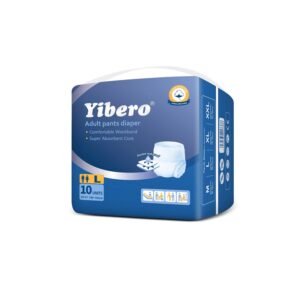
Pull-ons, or protective underwear, are designed to be pulled on and off like regular underwear. They are an excellent choice for active individuals who manage their own toileting. They offer a greater sense of normalcy and independence, though they may be more difficult to change in a public restroom as they require removing pants and shoes.
Pads and liners are placed inside the user’s own underwear and held in place with an adhesive strip. They range from very thin liners for light drips to large, contoured pads for moderate leakage. They are discreet and can be a good starting point for people new to incontinence products.
The Significance of Sizing and Fit for Comfort and Leak Prevention
An ill-fitting incontinence product is the primary cause of leaks and skin irritation. A product that is too large will have gaps around the leg openings, creating pathways for liquid to escape. A product that is too small will be uncomfortable, restrictive, and may not have the capacity to handle the expected volume.
Achieving the correct fit requires two measurements: the waist and the hips. You should use the larger of these two measurements to consult the manufacturer’s sizing chart. Do not assume that a “katamtaman” in one brand is the same as a “katamtaman” in another. Sizing can vary significantly, as noted by resources like in the context of baby diapers, a principle that applies equally to adult products. For bariatric users, specialized plus-size products are available that offer a more generous and secure fit, a topic expertly covered by guides on selecting bariatric diapers .
When trying a new product, check for a snug but comfortable fit. The leg gathers, or cuffs, should sit in the crease of the groin without pinching. There should be no significant gaps around the waist or legs. The core of the product should be positioned correctly to absorb fluid effectively.
Material Considerations: Skin Sensitivity and Breathability
The final element of this initial assessment concerns the materials that will be in direct contact with the skin. The skin in the perineal area is delicate and susceptible to irritation from moisture and friction. Modern incontinence products are complex, multi-layered items designed to manage moisture and protect the skin.
A typical disposable diaper consists of a nonwoven topsheet (the layer against the skin), an acquisition-distribution layer that quickly moves liquid away from the surface, an absorbent core, and a waterproof backsheet (). The core is the engine of the product, usually containing a mix of fluff pulp and superabsorbent polymer (SAP). SAPs are tiny crystals that can absorb many times their weight in liquid, turning it into a gel to lock it away from the skin.
For individuals with sensitive skin, look for products that are labeled “hypoallergenic” o “dermatologically tested.” Breathability is another key factor. Products with cloth-like, breathable side panels and outer covers allow air to circulate, which helps to keep the skin dry and healthy, reducing the risk of rashes and sores. Some people may have sensitivities to fragrances or lotions added to certain products, so an unscented option is often the safest choice.
By methodically working through these considerations—absorbency, style, laki ng, and material—you transform a daunting task into a manageable process. You are no longer just a consumer looking for where to buy adult diapers; you are an informed individual seeking a specific solution tailored to a unique human need.
Step 2: Navigating Online Retailers for Discretion and Variety
With a clear understanding of your product requirements, the next logical step is to explore the vast and accessible world of online retail. For many, the internet has become the primary answer to the question of where to buy adult diapers. The reasons for this shift are compelling, revolving around the core human needs for privacy, choice, at kaginhawahan. Purchasing incontinence products can feel like a private matter, and online platforms offer a shield from the potential discomfort of a public transaction. Let’s explore the nuances of this purchasing channel.
The Advantages of E-commerce: Privacy, Selection, at Kaginhawaan
The most profound advantage of buying online is discretion. Products arrive in plain, unmarked boxes, delivered directly to your door. This eliminates the need for a potentially awkward trip to a local store and the public handling of a large, conspicuous package. This privacy can be deeply empowering, removing a significant psychological barrier for many individuals and allowing them to manage their needs with dignity.
Beyond privacy, online retailers offer an unparalleled selection. A physical store is limited by its shelf space and may only carry a few popular brands and styles. Online, you can access a global marketplace. You can find niche products, such as those for extreme absorbency, specific skin sensitivities, bariatric sizes, or even reusable cloth options. You can compare dozens of brands, from well-known names to smaller, specialized companies, all from the comfort of your home.
Convenience is the third pillar of e-commerce. The ability to order at any time of day or night, without needing to travel, is invaluable, especially for those with mobility challenges or busy caregiving schedules. Automatic reordering or subscription services further simplify the process, ensuring you never run out of essential supplies.
Specialized Incontinence Suppliers vs. General Marketplaces
When you decide to buy online, you face a choice between two main types of vendors: specialized incontinence suppliers and large, general marketplaces like Amazon or Walmart.com.
| Purchasing Channel | Pros | Cons | Best For Whom |
|---|---|---|---|
| Specialized Online Stores | Expert advice, wide selection of niche products, free samples. | May have slightly higher prices, smaller user review base. | Users with specific needs or those seeking guidance. |
| General Marketplaces | Competitive pricing, fast shipping, extensive user reviews. | Overwhelming choices, less expert support, risk of counterfeit products. | Price-conscious buyers who know exactly what they want. |
| Physical Pharmacies | Immediate availability, professional advice from pharmacists. | Limited selection, higher prices, lack of privacy. | Urgent, one-time purchases or those needing medical advice. |
| Wholesale/Direct | Lowest per-unit cost, OEM/ODM options. | High minimum order quantities, requires significant storage space. | Care facilities, businesses, and high-volume long-term users. |
Specialized online suppliers focus exclusively on incontinence and related healthcare products. Their staff often have deep product knowledge and can offer personalized recommendations via phone, chat, or email. They are more likely to offer free samples, allowing you to try a product before committing to a full case. These specialists curate their inventory, often weeding out poorly performing products based on customer feedback . This can be an excellent option if you are new to these products or have complex needs.
General marketplaces, on the other hand, compete primarily on price and logistics. You may find lower prices and benefit from existing memberships that offer fast, free shipping. The sheer volume of user reviews can be helpful, offering a broad consensus on a product’s performance. Gayunpaman, the selection can be overwhelming, and the lack of expert guidance can make it difficult to choose. There is also a higher risk of encountering third-party sellers with questionable product quality or authenticity.
How to Read Product Descriptions and Reviews Effectively
Navigating the digital aisle requires a certain literacy. Do not be swayed by marketing language alone. Instead, become a detective.
First, dissect the product description. Look for concrete specifications. What is the absorbency capacity, preferably listed in milliliters (ml) or ounces (oz)? What are the exact waist and hip measurements for each size? What materials is the product made from? Is it latex-free? Does it have a “wetness indicator”—a line that changes color when the product is soiled, which is a useful feature for caregivers.
Second, learn to read customer reviews with a critical eye. Ignore the most glowing and the most scathing reviews, as they are often outliers. Look for patterns in the middle-of-the-road reviews. Do multiple people mention that the sizing runs small? Are there consistent complaints about the tabs tearing? Do reviewers praise its overnight performance specifically? Try to find reviews from people whose situation mirrors your own—similar body type, level of incontinence, and mobility.
Subscription Services: A Cost-Effective and Convenient Option
Many online retailers now offer subscription services, often called “auto-ship” o “subscribe and save.” This model offers several benefits. Typically, you receive a discount (madalas 5-15%) on each order. You set a delivery schedule—every four weeks, every six weeks, etc.—and the products arrive automatically.
This service provides peace of mind, eliminating the mental load of remembering to reorder and the risk of running out unexpectedly. It simplifies budgeting by creating a predictable, recurring expense. For anyone managing a chronic condition, reducing the number of logistical tasks can be a significant quality-of-life improvement. Most services are flexible, allowing you to easily change the delivery date, adjust the quantity, or cancel at any time. For long-term users, a subscription is often the most efficient and economical way to procure supplies.
Step 3: Purchasing from Physical Stores: Pharmacies and Supermarkets
While the digital marketplace offers undeniable advantages, the role of the traditional brick-and-mortar store remains significant in the landscape of where to buy adult diapers. There are specific circumstances and personal preferences that make a trip to a local pharmacy, supermarket, or big-box retailer the most practical choice. Understanding the unique value proposition of these physical locations allows you to use them strategically as part of a comprehensive procurement plan.
When to Choose a Brick-and-Mortar Store: Immediacy and Tangibility
The most compelling reason to purchase from a physical store is immediacy. Perhaps you are traveling and forgot to pack enough supplies, a caregiver has discovered an unexpected need, or you have just been discharged from a hospital. In these moments, you cannot wait two days for an online order to arrive. The ability to walk into a store and leave with the necessary product within minutes is invaluable. This immediate access provides a crucial safety net for urgent or unforeseen situations.
Furthermore, physical stores offer tangibility. You can see and touch the package, read the details up close, and get a better sense of the product’s size and features. For some, especially those who are less comfortable with online shopping, this physical interaction with the product provides a sense of confidence and certainty that a digital image cannot replicate. You can hold two different packages in your hands and directly compare their stated features, which can be a helpful part of the decision-making process for visual or tactile learners.
Comparing Selection and Pricing in Pharmacies vs. Big-Box Stores
When you opt for a physical store, you generally have two main choices: a dedicated pharmacy (like CVS or Walgreens in the U.S., or their international equivalents) or a large supermarket/big-box store (like Walmart, Target, or Carrefour).
Pharmacies tend to have a more curated, health-focused selection. They often carry products from medically recognized brands and may have their own reputable store-brand equivalents. The primary advantage of a pharmacy is the potential for professional consultation, which we will discuss next. Gayunpaman, their selection is typically smaller than a supermarket’s, and their prices may be slightly higher due to their smaller scale and focus on convenience.
Big-box stores and supermarkets compete more aggressively on price. They often have a dedicated aisle for home healthcare and feature a wider variety of brands, including their own value-oriented store brands. You are more likely to find bulk packaging in these larger stores, which can offer a better per-unit price. The downside is the complete absence of expert staff in that specific aisle. You are on your own to decipher the packaging and make a choice.
Seeking Professional Advice from Pharmacists
One of the most underutilized resources in the quest for the right incontinence product is the community pharmacist. These professionals are highly trained and accessible healthcare providers. A pharmacist can help you navigate the differences between brands, explain the meaning of terms like “maximum absorbency,” and offer advice on related issues like skin care to prevent diaper rash.
If you are managing other health conditions or taking medications, a pharmacist can provide integrated advice. For example, certain medications can affect bladder control, and a pharmacist can discuss these side effects with you. They can act as a discreet and knowledgeable sounding board, offering a level of personalized, in-person guidance that is impossible to find in a supermarket or an online marketplace. Building a relationship with a local pharmacist can be a valuable asset in managing long-term incontinence needs.
Overcoming the Psychological Barrier of In-Person Purchases
For many, the biggest hurdle to buying adult diapers in a physical store is a feeling of embarrassment or a fear of judgment. This is a deeply human and understandable emotion, rooted in societal stigmas around aging and bodily functions. It is helpful to remember a few things to mitigate this feeling.
First, recognize that you are far from alone. Millions of people of all ages purchase these products regularly. For the store employees, selling these items is a routine, unremarkable part of their job, equivalent to selling toothpaste or bandages. They are focused on scanning items and completing the transaction, not on judging your purchases.
Second, be prepared. Knowing exactly which brand, style, and size you need before you enter the store can make the process quicker and more efficient. Walk in with confidence, locate the aisle, pick up your product, and proceed to the checkout.
Third, consider using self-checkout lanes. These automated kiosks allow you to scan and pay for your items without any interaction with a cashier, offering a completely private transaction. This feature has been a welcome innovation for many who prefer to keep their health-related purchases to themselves. By reframing the experience and using available tools, the psychological weight of an in-person purchase can be significantly lightened.
Step 4: Exploring Medical Supply Stores and DME Providers
Beyond the familiar aisles of supermarkets and the vast digital shelves of online retailers lies a more specialized channel for procuring incontinence products: medical supply stores and Durable Medical Equipment (DME) providers. This path is often overlooked by the general public but is a cornerstone for individuals with more complex medical needs, those navigating the healthcare system for payment assistance, or those seeking products not available through conventional retail. Approaching these suppliers is a move toward a more clinical and customized solution.
The Role of Durable Medical Equipment (DME) Mga Supplier
DME suppliers are entities that provide a wide range of home healthcare equipment and supplies. Their scope extends far beyond incontinence products to include items like wheelchairs, hospital beds, oxygen equipment, and walking aids. Because their entire business model is centered on medical needs, their approach to incontinence products is fundamentally different from that of a general retailer.
These suppliers are experts in the medical application of their products. They understand the clinical reasons behind different product designs and can match a product to a specific medical diagnosis or level of functional impairment. They work directly with hospitals, rehabilitation centers, and doctors’ offices, so they are well-versed in the standards of care for various conditions. For someone dealing with incontinence as a result of surgery, a neurological condition like multiple sclerosis, or a spinal cord injury, a DME supplier can offer a level of expertise that is simply not available elsewhere. They are a critical part of the healthcare ecosystem, bridging the gap between clinical care and life at home.
Navigating Insurance Coverage and Prescriptions
One of the most compelling reasons to work with a DME provider is their ability to handle insurance billing. In many countries, including the United States with its Medicare and Medicaid programs, incontinence supplies may be covered if they are deemed “medically necessary.” This typically requires a prescription from a doctor that specifies the type and quantity of products needed per month.
Navigating the world of insurance benefits can be a labyrinthine and frustrating process. A good DME supplier acts as your advocate and guide. They will:
- Verify your insurance coverage and explain what your plan will and will not pay for.
- Work with your doctor’s office to obtain the necessary prescription and documentation.
- Submit the claims to your insurance company on your behalf.
- Ship the approved quantity of supplies directly to your home on a recurring basis.
This service removes a significant financial and administrative burden from the individual or caregiver. While the process can take time to set up, the long-term benefit of receiving necessary supplies with little to no out-of-pocket cost can be life-changing. It is a vital avenue to explore for anyone facing long-term, high-volume needs. The International Consultation on Incontinence highlights the importance of such structured management programs in improving patient outcomes (Riemsma et al., 2023).
Finding Specialized Products: Bariatric and Youth Sizes
Retail stores typically stock the most common sizes to maximize sales from their limited shelf space. This means they often fail to cater to individuals at the ends of the size spectrum. DME and medical supply stores excel in this area.
They are the most reliable source for bariatric products, which are designed for larger individuals with waists exceeding 65-70 inches. These products are not just scaled-up versions of standard diapers; they are engineered with wider cores, more robust fastening systems, and different proportions to ensure a secure and comfortable fit for plus-size bodies .
Similarly, they are a key resource for youth-sized products. Many older children, teenagers, and small-statured adults with disabilities find themselves in a gap where baby diapers are too small and adult small sizes are too large. Medical supply stores carry products specifically designed for this demographic, providing a proper fit that is essential for both leak protection and the user’s self-esteem.
The Value of Professional Fitting and Consultation
Perhaps the most unique service offered by some DME providers is professional fitting and consultation. While less common for disposable products than for more complex equipment, many suppliers have trained staff, sometimes including nurses or occupational therapists, who can provide personalized guidance.
This can be particularly valuable for new users or when a current product is failing. A consultant can assess the user’s body shape, mobility, and lifestyle to recommend the ideal product style and size. They can provide samples of different products to trial at home. They can also teach caregivers proper application techniques to maximize effectiveness and prevent leaks, such as ensuring the leg gathers are properly positioned and the tabs are secured correctly. This hands-on, expert-led approach elevates the process from a simple purchase to a comprehensive care solution, ensuring the chosen product truly meets the user’s needs.
Step 5: Sourcing Directly from Manufacturers and Wholesalers
The final avenue to explore in your search for where to buy adult diapers is the most direct one: sourcing from wholesalers or straight from the manufacturer. This approach represents a significant shift in scale, moving from a consumer mindset to a bulk-purchasing or business-oriented strategy. While not suitable for everyone, for the right person or organization, this channel offers unparalleled economic benefits and customization opportunities.
When to Consider Bulk Purchasing: For Care Facilities and Long-Term Users
The primary motivation for buying wholesale is cost savings. By purchasing in large quantities—typically by the case or even by the pallet—you bypass the retail markup applied by stores and online sellers. The per-unit price can be significantly lower, leading to substantial savings over time.
This model is the standard for institutional settings like nursing homes, hospitals, and assisted living facilities. For these organizations, incontinence products are a major operational expense, and managing that cost through bulk purchasing is essential.
Gayunpaman, this option is also viable for individual long-term users who have stable needs. If you have found a product that works perfectly for you and you anticipate using it for the foreseeable future, buying a several-month supply at once can be a savvy financial move. The main considerations are the upfront cost and the need for adequate storage space. You must have a clean, dry area to store multiple cases of product. For those who can manage these logistics, the savings can be well worth the effort.
The Benefits of OEM and ODM Services for Businesses
For entrepreneurs, existing retailers, or healthcare organizations looking to create their own brand, sourcing directly from a manufacturer opens up the world of Original Equipment Manufacturer (OEM) and Original Design Manufacturer (ODM) services.
OEM means the factory produces a product based on your specific design and brand. You control every aspect, from the choice of raw materials and absorbency levels to the packaging design. This allows for the creation of a unique product tailored to a specific market niche.
ODM is a more streamlined process where you select a pre-existing product design from the manufacturer’s catalog and have it packaged with your own branding. This is a faster and more cost-effective way to launch a private-label brand, as it eliminates the research and development phase.
Engaging with a manufacturer that provides customized hygiene solutions allows a business to control its supply chain, dictate product quality, and build brand equity. It transforms you from a reseller into a brand owner. This is a sophisticated strategy for those looking to enter the hygiene products market or for large facilities wanting a consistent, custom-specified product.
Understanding the Global Supply Chain: From Raw Materials to Finished Goods
When you engage directly with a manufacturer, you gain a deeper appreciation for the complexity of the product itself. The history of diapers has evolved from simple animal skins to highly engineered multi-component systems . A modern adult diaper is a product of global logistics. Fluff pulp may come from sustainable forests in North America, superabsorbent polymers from chemical plants in Europe or Asia, and nonwoven fabrics from specialized textile mills.
A reliable manufacturer manages this intricate supply chain to ensure quality and consistency. They have rigorous quality control processes for incoming raw materials and for the finished product. Understanding this process helps you ask better questions when vetting a potential supplier. You can inquire about their sourcing policies, their quality testing methods, and their production capacity. This knowledge is power, enabling you to form a true partnership with a supplier rather than just a transactional relationship. Reputable suppliers often provide one-stop diaper procurement solutions, handling everything from raw material sourcing to final delivery, which simplifies the process for buyers.
A Look at Integrated Service Solutions
The most advanced suppliers offer more than just manufacturing. They provide integrated, end-to-end service solutions. This can include:
- Market Research: Helping you understand trends and opportunities in your target market.
- Product Development: Collaborating with you to design a product that meets specific performance and cost targets.
- Logistics and Shipping: Arranging for international shipping, customs clearance, and delivery to your warehouse.
- Marketing Support: Providing product images, specifications, and other materials to help you market your new brand.
This comprehensive partnership model is especially valuable for businesses new to the industry or those looking to expand into new geographical markets, such as the diverse regions of the USA, Russia, Europe, the Middle East, and Southeast Asia. Working with a single, integrated supplier simplifies what would otherwise be an incredibly complex undertaking, allowing you to focus on sales and customer service while they manage the production and supply chain.
Beyond the Purchase: Environmental and Ethical Considerations
The decision of where to buy adult diapers, and which ones to buy, does not exist in a vacuum. It carries with it a ripple of environmental and ethical consequences. As consumers and citizens, a deeper understanding of a product’s lifecycle, from its creation to its disposal, enriches our choices and allows us to align our purchasing habits with our values. The convenience of modern disposable hygiene products comes at a significant environmental cost, a reality that is prompting innovation and debate within the industry.
The Lifecycle of a Disposable Diaper: From Production to Landfill
The journey of a single disposable diaper is a long one. It begins with the extraction of raw materials: wood is harvested for fluff pulp, and petroleum is used to create plastics and superabsorbent polymers. These materials are processed and transported to a manufacturing facility, where they are assembled into the final product, packaged, and shipped globally. After a single use, its journey ends in a landfill or incinerator.
The environmental impact at the end of this lifecycle is substantial. A typical disposable diaper can take an estimated 500 years to decompose in a landfill . During this slow process, they can release methane, a potent greenhouse gas, and potentially leach toxins into the soil and groundwater. The sheer volume of waste is staggering, with used diapers constituting a significant portion of municipal solid waste. Researchers are actively analyzing the environmental and health aspects of diaper waste to develop better management strategies ().
The Rise of Biodegradable and Eco-Friendly Alternatives
In response to these environmental concerns, a market for “eco-friendly” o “biodegradable” diapers has emerged. These products aim to reduce their environmental footprint by using more sustainable materials. This might include using bamboo pulp instead of wood pulp, plant-based plastics (PLAs) for the backsheet, or eliminating chlorine, mga pabango, and lotions in their processing.
Gayunpaman, the term “biodegradable” can be misleading. For a product to biodegrade, it requires specific conditions of oxygen and microorganisms, which are often absent in the compacted environment of a modern landfill. While these products may be made from more renewable resources, their end-of-life impact may not be substantially different from conventional diapers unless they are disposed of in a specialized industrial composting facility, which are not widely available. Despite this, the push toward plant-based components represents a positive shift in material sourcing, reducing reliance on fossil fuels .
Understanding Diaper Composition: What’s Inside?
A thoughtful consumer might ask: what am I actually putting against my skin and eventually into the environment? As previously noted, a diaper is a composite of several materials, each with a specific function. The topsheet is typically made of polypropylene, a nonwoven plastic fabric. The absorbent core is a blend of cellulose fluff pulp and sodium polyacrylate (the SAP). The backsheet is often polyethylene, the same plastic used in grocery bags ().
Knowing this composition allows you to make more informed choices. If you have a sensitivity to plastics, you might seek out a product with a higher percentage of plant-based materials. Understanding the function of SAPs helps you appreciate why even eco-friendly diapers still rely on this polymer for effective absorbency. It is the key ingredient that locks away moisture and keeps skin dry.
The Debate: Disposable vs. Reusable Adult Incontinence Products
The most significant environmental choice a user can make is to consider reusable products. Modern adult cloth diapers are a world away from the plastic pants of the past. They consist of a waterproof outer shell and highly absorbent, washable inner inserts, often made from materials like cotton, bamboo, or hemp.
The debate between disposables and reusables is complex.
- Environmental Impact: Reusables have a higher upfront environmental cost due to the resources needed for their manufacturing. Gayunpaman, their long-term impact is generally lower than disposables, provided they are washed in an energy- and water-efficient manner. Disposables generate continuous waste but require no water or energy for cleaning.
- Gastos: Reusables have a high initial purchase price but can be significantly cheaper in the long run, as they can be washed and reused hundreds of times. Disposables represent a lower initial cost but a continuous, ongoing expense.
- Kaginhawaan: Disposables are undeniably more convenient. They are simply rolled up and thrown away. Reusables require a system for storing soiled items and a regular laundry routine.
- Performance: High-quality disposables often offer superior absorbency and leak protection, especially for heavy or overnight use. Gayunpaman, modern reusable systems have improved dramatically and can be very effective when fitted and used correctly.
The choice is not a simple one and depends heavily on the individual’s lifestyle, budget, level of incontinence, and environmental priorities. For some, a hybrid approach might work best, using disposables when traveling or for overnight use, and reusables during the day at home.
FAQ
How do I find the right size adult diaper?
To find the right size, you need two key measurements: your waist at the navel and your hips at their widest point. Use the larger of these two numbers and compare it to the sizing chart provided by the product manufacturer. Do not assume sizing is consistent between brands. A snug fit in the leg guards without being too tight is the goal for leak prevention.
What is the most absorbent adult diaper for nighttime?
Products labeled “overnight” o “maximum absorbency” are designed for extended use. Look for briefs (tab-style) as they typically offer the highest capacity. Key features to look for include a high absorbency rating (often measured in milliliters), standing leak guards, and a wide core. Using a “booster pad” inside a regular brief can also increase its capacity for nighttime use.
Can I get adult diapers for free through insurance?
In many cases, yes. In the U.S., programs like Medicaid often cover incontinence supplies if they are deemed medically necessary by a doctor. Medicare coverage is more limited, typically only covering them under specific circumstances. The best approach is to contact a Durable Medical Equipment (DME) tagapagtustos ng. They can verify your insurance benefits and handle the paperwork with your doctor’s office.
What is the difference between a brief and a pull-on?
A brief, also known as a tab-style diaper, has refastenable tabs on the sides. It is ideal for individuals with limited mobility as it can be changed while lying down. A pull-on, or protective underwear, is pulled on and off like regular underwear. It is best for active, independent individuals who prefer a more discreet, underwear-like feel.
How can I buy adult diapers discreetly?
Online retailers are the most discreet option. They ship products in plain, unmarked cardboard boxes directly to your home. Many also offer subscription services for added convenience. If you must buy in a physical store, using self-checkout lanes allows you to purchase them without interacting with a cashier.
Are there eco-friendly adult diapers?
Oo nga, there are products marketed as eco-friendly. These typically use more plant-based materials like bamboo pulp and non-chlorine bleached materials. While they reduce reliance on fossil fuels, their biodegradability in a landfill is limited. For a truly lower-impact option, consider modern reusable (cloth) adult incontinence systems.
What are some different global terms for diaper pants?
The term for pull-on style adult diapers, or diaper pants, can vary by region. While “pull-ons” o “protective underwear” are common in the USA, other places use different names. Understanding these best adult diapers is helpful for international buyers or those searching on global e-commerce sites.
Conclusion
The journey to find the right incontinence product is a deeply personal one, intertwined with considerations of health, dignidad, and practicality. The question of where to buy adult diapers has no single, universal answer. Instead, the optimal choice emerges from a thoughtful assessment of one’s unique circumstances. The digital shelves of online retailers offer discretion and an almost infinite variety, while the immediacy of a local pharmacy provides a crucial safety net. For those with complex medical needs or seeking financial assistance, the specialized expertise of a medical supply store is invaluable. For organizations or high-volume users, the economic logic of wholesale purchasing is compelling.
Making an informed decision requires more than just choosing a store; it demands an understanding of the products themselves—their styles, materials, and sizing. It involves a willingness to engage with the process, to ask questions, and to seek out the solution that best supports the user’s quality of life. By approaching this task with knowledge and empathy, the purchase of a simple hygiene product is transformed into a powerful act of care, ensuring comfort, tiwala sa sarili, and well-being.
References
Alhogbi, B. G. (2022). End-of-life management of single-use baby diapers: Analysis of technical, health and environment aspects. Science of The Total Environment, 851(1), 158129.
Bearer, C. F. (2024). The history of diapers and their environmental impact. Pediatric Research, 96, 1032–1034. https://doi.org/10.1038/s41390-024-03347-5
Buchanle, L. (2025). The effect of diaper biodegradability on absorbency. Vanderbilt University Young Scientist Journal. Retrieved from https://wp0.vanderbilt.edu/youngscientistjournal/article/the-effect-of-diaper-biodegradability-on-absorbency
EDANA. (2025). Adult incontinence products composition. EDANA, the voice of nonwovens. Retrieved from
Green Mountain Diapers. (2025). Cloth-eez workhorse diapers size chart. Retrieved from
Parentgiving Admin. (2023, July 19). Guide to selecting bariatric plus-size adult diapers. Parentgiving. Retrieved from https://www.parentgiving.com/blogs/everything-incontinence/guide-selecting-plus-size-adult-diapers?srsltid=AfmBOopdYTPpnhnYBqgy1la69kzMxs9iBwQABz1IukxIC5mbBrrqQF41
Riemsma, R., Hagen, S., Kirschner-Hermanns, R., Norton, C., Wijk, H., Andersson, K. E., et al. (2023). Management using continence products: Report of the 7th International Consultation on Incontinence. ICI-RS 2023–The International Continence Society, 2(4), 100140.


