Abstract
This analysis examines the multifaceted advantages of sourcing disposable panty diapers for baby soft breathable good quality baby pant diaper from China in the contemporary global market of 2025. The investigation moves beyond a superficial cost-benefit analysis to explore the intricate ecosystem that establishes China as a premier manufacturing hub for high-quality hygiene products. It probes the convergence of advanced manufacturing technologies, including automated quality control and innovations in material science like Super Absorbent Polymers (SAP), with a highly sophisticated and resilient global supply chain. The paper evaluates the profound capabilities for Original Equipment Manufacturer (OEM) and Original Design Manufacturer (ODM) customization, which allow global brands to tailor products to specific market needs and consumer preferences. Furthermore, it considers the rigorous adherence to international safety and quality standards (such as ISO and CE) and the strategic benefit of sourcing a comprehensive range of hygiene products from a single, integrated supplier. The argument presented is that selecting a Chinese manufacturer is a strategic decision grounded in an appreciation for technological prowess, logistical efficiency, and unparalleled production scalability, offering a robust solution for businesses aiming for market leadership.
Key Takeaways
- China’s manufacturing scale offers unparalleled cost-effectiveness through advanced automation.
- Sourcing a disposable panty diapers for baby soft breathable good quality baby pant diaper from China ensures access to leading R&D.
- Robust OEM/ODM services allow for deep product customization and branding.
- Integrated supply chains provide a one-stop solution for diverse hygiene products.
- Strict adherence to global quality standards like ISO and CE is now commonplace.
- Sophisticated logistics networks ensure efficient delivery to global markets.
- Continuous innovation leads to superior product features and materials.
Table of Contents
- 1. Unparalleled Manufacturing Scale and Technological Sophistication
- 2. A Paradigm of Cost-Effectiveness Without Compromising Quality
- 3. Mastery of the Global Supply Chain and Logistics
- 4. Sophisticated OEM and ODM Customization Capabilities
- 5. A Commitment to Innovation and Rapid Product Development
- 6. Adherence to International Quality and Safety Standards
- 7. A Comprehensive Ecosystem for All Hygiene Product Needs
- Frequently Asked Questions (FAQ)
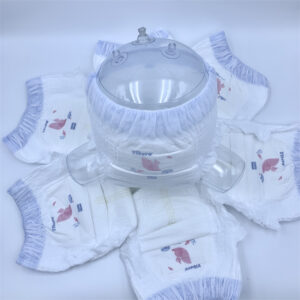
1. Unparalleled Manufacturing Scale and Technological Sophistication
The decision to source hygiene products, particularly something as intimate and vital as a baby diaper, extends far beyond a simple calculation of unit cost. It touches upon a profound responsibility for the well-being of the most vulnerable members of society. When a business chooses a manufacturing partner, it is, in essence, making a promise to parents about the safety, comfort, and reliability of the product that will be in direct contact with their child’s skin. In this context, the manufacturing landscape of China in 2025 presents a compelling case, not merely of economic advantage, but of technological and operational excellence. The sheer scale of production, once seen primarily through the lens of labor arbitrage, has evolved into a highly sophisticated ecosystem driven by technology, process optimization, and a deep understanding of material science. This transformation is central to understanding why sourcing a disposable panty diapers for baby soft breathable good quality baby pant diaper from China has become a strategic imperative for global brands.
The Economics of Scale in Action
The concept of economies of scale is fundamental to economic theory, yet its application in the Chinese diaper industry is a practical marvel. The immense production volumes achieved by leading manufacturers create a virtuous cycle. High-volume output allows for the procurement of raw materials—such as non-woven fabrics, fluff pulp, and Super Absorbent Polymers (SAP)—at significantly lower per-unit costs. Suppliers of these materials are often co-located within vast industrial parks, reducing transportation expenses and fostering a highly competitive sourcing environment. This cost reduction is not merely passed on to the buyer; it is reinvested into the production line itself. It funds the acquisition of state-of-the-art machinery, the expansion of facilities, and the implementation of advanced quality control systems. A factory producing millions of diapers daily can justify the capital expenditure for a high-speed, fully automated production line from leading European or Japanese machine manufacturers, an investment that would be untenable for a smaller-scale operation. This scale allows a manufacturer to absorb fluctuations in raw material costs more effectively, offering price stability to its B2B clients, which is a significant factor for businesses planning long-term inventory and pricing strategies across markets like the USA, Russia, and Southeast Asia.
Investment in Advanced Automation and Robotics
The narrative of Chinese manufacturing has decisively shifted from one of abundant labor to one of intelligent automation. Within the modern diaper factory, one observes not throngs of workers, but a meticulously choreographed dance of robotic arms, high-speed conveyors, and sensor-based monitoring systems. Automation governs every critical stage of production. High-speed machines precisely layer the different components of the diaper—the topsheet, acquisition-distribution layer (ADL), absorbent core, and backsheet—at speeds exceeding 800 pieces per minute. Vision systems, integrated with artificial intelligence, scan every single diaper for defects such as improper tab placement, core clumping, or tears in the fabric. Any unit failing to meet the predefined parameters is automatically ejected from the line without human intervention. This level of automation accomplishes two vital goals. First, it ensures a degree of product consistency that is humanly impossible to achieve, a consistency that builds consumer trust and brand loyalty. Second, it elevates the standard of hygiene during production. By minimizing human contact with the product, the risk of contamination is drastically reduced, a non-negotiable requirement for a product intended for infants. This technological embrace is a core reason why a modern disposable panty diapers for baby soft breathable good quality baby pant diaper from China can compete with, and often exceed, the quality of products made anywhere else in the world.
A Deep Dive into Core Technologies
The quality of a diaper is ultimately determined by the science embedded within its materials. Chinese manufacturers have not only become adept at assembling these materials but have also become centers of innovation in their application. The heart of any modern diaper is the absorbent core. The evolution from a simple, bulky fluff pulp core to a sophisticated, ultra-thin composite core is a testament to this innovation. This new generation of cores blends fluff pulp with precisely distributed SAP. SAPs are remarkable polymers capable of absorbing and retaining many times their weight in liquid, transforming it into a stable gel and locking it away from the baby’s skin. Leading manufacturers have perfected the technology to create “channel cores” or “grooved cores,” which distribute liquid rapidly and evenly, preventing sagging and improving the overall fit and comfort of the diaper. The breathability of the diaper, a key factor in preventing diaper rash, is another area of intense focus. Manufacturers utilize advanced non-woven fabrics for the backsheet that are microporous—they allow water vapor to escape while preventing liquid from leaking out. This “breathable” technology maintains a healthier microclimate against the skin. The softness of the topsheet, the layer in direct contact with the baby, is achieved through processes like hot-air-through bonding, which creates a pillowy, cotton-like texture. These are not just components; they are a system designed for performance, comfort, and skin health.
| Feature | Traditional Diaper Technology (circa 2000) | Modern Disposable Panty Diaper Technology (2025) |
|---|---|---|
| Absorbent Core | Thick, bulky core made almost entirely of fluff pulp. Prone to clumping and sagging when wet. | Ultra-thin composite core with a precise blend of fluff pulp and Super Absorbent Polymer (SAP). Often features channels for rapid fluid distribution. |
| Backsheet (Outer Layer) | Plastic, non-breathable polyethylene film. Trapped moisture and heat, increasing the risk of diaper rash. | Microporous, cloth-like breathable backsheet. Allows air and vapor to circulate, keeping skin drier and healthier. |
| Fit and Comfort | Simple tape-style fasteners. Less flexible, often leading to gaps at the legs and waist. | 360-degree stretchy waistband and leg cuffs. Panty-style design moves with the baby, providing a snug, leak-proof fit. |
| Wetness Indicator | Rarely available or a simple, less reliable design. Parents relied on physical checks. | Standard feature. A printed line that changes color when wet, providing a clear and convenient signal for changing. |
| Material Softness | Materials were functional but often felt stiff or papery to the touch. | Focus on “cloud-soft” materials using techniques like hot-air-through bonding for topsheets and waistbands. |
2. A Paradigm of Cost-Effectiveness Without Compromising Quality
The notion of “cost-effectiveness” when sourcing from China often carries with it an outdated and simplistic connotation of being merely “cheap.” This perspective fails to grasp the complex interplay of economic and industrial factors that allow Chinese manufacturers to offer a superior value proposition. The paradigm in 2025 is not about a race to the bottom on price, but a sophisticated balancing of cost, quality, and innovation. For a global business, sourcing a high-quality product like a disposable panty diapers for baby soft breathable good quality baby pant diaper from China is an exercise in strategic value optimization. It involves tapping into an ecosystem that has been engineered over decades to deliver world-class products at a price point that enables competitive positioning in diverse international markets. This is not achieved by cutting corners; it is achieved through systemic efficiency, a robust quality assurance culture, and a deep integration of the entire value chain.
Deconstructing the Cost Advantage
The cost advantage of Chinese manufacturing is a composite of several interconnected factors. While labor costs have risen significantly over the past decade, they remain competitive when viewed in terms of productivity and skill. The crucial element is the value derived from that labor, which is now augmented by advanced automation, reducing the labor cost component per unit to a fraction of what it once was. The more significant advantage lies in the supply chain for raw materials. China is one of the world’s largest producers and consumers of the base components for diapers, including non-woven fabrics and SAP. This massive domestic demand fosters intense competition among raw material suppliers, driving down prices. Furthermore, this localized sourcing eliminates the substantial costs and logistical complexities associated with importing materials from other continents. Governmental support, in the form of tax incentives for exporters and investment in critical infrastructure like ports and transportation networks, further refines the cost structure. When these elements—productive labor, low-cost raw materials, and supportive infrastructure—are combined within a framework of immense scale, the result is a structurally lower cost base that does not necessitate a compromise on the quality of the final product. A reliable provider like a China baby nappies manufacturer can leverage these advantages to offer competitive pricing for premium products.
The Quality Assurance Ecosystem
The perception of quality in Chinese manufacturing has undergone a radical transformation. Leading factories no longer view quality control as a final inspection point but as a philosophy embedded in every step of the production process. This commitment is formalized through the adoption of internationally recognized quality management systems, most notably ISO 9001. This certification is not merely a piece of paper; it signifies that the manufacturer has implemented a rigorous system for process control, documentation, continuous improvement, and customer satisfaction. The quality assurance ecosystem extends to the physical testing of the product. On-site laboratories are equipped with specialized machinery to conduct a battery of tests on every production batch. These tests simulate real-world conditions, measuring key performance indicators such as rewet (the amount of moisture that returns to the surface under pressure), absorption speed, and the tensile strength of the elastic waistbands and side seams. Vision systems on the production line provide 100% inspection for assembly defects, ensuring that the product that reaches the consumer is precisely the product that was designed. This relentless focus on quality is a direct response to the demands of a global marketplace and is a cornerstone of the trust that must exist between a manufacturer and a B2B partner responsible for a brand’s reputation.
A Comparative Cost Analysis
To truly appreciate the value proposition, it is helpful to visualize a comparative analysis. A business looking to launch a new line of premium baby diapers has several sourcing options, each with a distinct profile of costs and benefits. Sourcing from Western Europe or North America might offer proximity to the end market but often comes with substantially higher costs for labor and manufacturing overheads. Sourcing from other emerging economies might offer lower labor costs but can be hampered by less developed infrastructure, inconsistent raw material supply, and a less mature quality assurance framework. China occupies a unique position in this landscape, offering a synthesis of competitive costs and first-world manufacturing capabilities. This balance is what makes sourcing a disposable panty diapers for baby soft breathable good quality baby pant diaper from China such a compelling strategic choice.
| Factor | Sourcing from China | Sourcing from Western Europe | Sourcing from Another Emerging Market |
|---|---|---|---|
| Unit Production Cost | Highly Competitive | High | Low to Medium |
| Raw Material Sourcing | Integrated, low-cost domestic supply chain. | Higher cost, often reliant on imports. | Variable, often reliant on imports, potential for supply chain disruption. |
| Labor Cost & Productivity | Moderate cost with very high, automation-driven productivity. | High cost, high productivity. | Low cost, but often with lower productivity and less automation. |
| Technology & Automation | State-of-the-art, high-speed automated lines are common. | High level of automation and technology. | Varies widely, often less advanced. |
| Quality Control & Standards | Strong adherence to ISO 9001, CE. Sophisticated on-site labs and vision systems. | Very high standards (CE, etc.), rigorous quality control. | Inconsistent; requires significant buyer-led quality assurance efforts. |
| Logistics & Infrastructure | World-class ports and global shipping networks. | Excellent infrastructure, but higher shipping costs to non-EU markets. | Developing infrastructure can lead to delays and higher logistical costs. |
| OEM/ODM Flexibility | Excellent. Highly developed ecosystem for customization. | Good, but can be less flexible and more expensive for custom designs. | Limited, often focused on standard, high-volume products. |
Mastery of the Global Supply Chain and Logistics
A superior product is of little value if it cannot be delivered to the market reliably, efficiently, and in a cost-effective manner. The brilliance of the Chinese manufacturing model for hygiene products lies not only within the factory walls but also in its profound integration with one of the most formidable logistics and supply chain networks the world has ever seen. This mastery is not an accident of geography; it is the result of decades of deliberate, massive investment in infrastructure and the cultivation of a deeply interconnected industrial ecosystem. When a business sources a product like a disposable panty diapers for baby soft breathable good quality baby pant diaper from China, it is plugging into this powerful network. This network ensures that from the moment raw materials are sourced to the final delivery of finished goods to a warehouse in Houston, Hamburg, or Dubai, the process is optimized for speed, reliability, and cost control. This logistical prowess is a silent partner in the success of any global brand.
The Integrated Raw Material Network
The journey of a diaper begins long before the production line. It starts with the sourcing of its constituent parts: the non-woven fabrics for the topsheet and backsheet, the fluff pulp and SAP for the absorbent core, the spandex for the elastic components, and the adhesives that hold it all together. A key strategic advantage of Chinese manufacturing is the colocation and integration of these raw material suppliers. Instead of relying on a fragile and expensive global supply chain for these inputs, diaper manufacturers can source the vast majority of them domestically, often from suppliers located within the same province or industrial zone. This proximity creates a tightly woven network that offers several profound benefits. Lead times for raw materials are drastically reduced, allowing manufacturers to be more agile and responsive to changes in demand. Transportation costs are minimized, contributing to the overall cost-effectiveness of the final product. This integration also fosters intense collaboration and innovation. Diaper manufacturers can work directly with fabric and polymer suppliers to develop custom materials with specific properties, such as enhanced softness or improved absorbency, creating a cycle of continuous product improvement that is difficult to replicate in a more fragmented supply chain.
World-Class Port Infrastructure and Shipping Networks
Once the diapers are produced, packaged, and loaded into containers, they enter a logistical superhighway. China is home to seven of the world’s ten busiest container ports, including Shanghai, Ningbo-Zhoushan, and Shenzhen. These are not just ports; they are sprawling, technologically advanced hubs designed for maximum efficiency. Highly automated cranes, intelligent terminal operating systems, and deep-water berths capable of accommodating the largest container ships in the world ensure that cargo moves with remarkable speed. These ports serve as the gateways for a dense network of global shipping lanes, with frequent sailings to every major commercial port on the planet. This means that a container of diapers can be loaded onto a vessel bound for Los Angeles, Rotterdam, or Jeddah with minimal waiting time. The sheer volume of trade flowing through these ports creates intense competition among shipping lines, which helps to keep freight costs competitive. For a B2B buyer, this logistical efficiency translates into predictable delivery schedules, reduced transit times, and lower landed costs, all of which are vital for managing inventory and meeting the demands of retail partners in far-flung markets.
Navigating International Trade and Customs
The final leg of the supply chain journey involves the complex world of international trade regulations, customs clearance, and import duties. This is an area where an experienced and professional Chinese supplier proves its immense value. A seasoned manufacturer, particularly one with a history of exporting to diverse global markets, possesses a deep well of institutional knowledge regarding the specific documentation and compliance requirements for different countries. They understand the nuances of the Harmonized System (HS) codes for hygiene products, the specific testing and certification needed for CE marking in the European Union, and the registration processes required by the FDA in the United States. Reputable suppliers have dedicated logistics teams that manage the entire export process, from booking freight and preparing the bill of lading to providing the necessary certificates of origin and quality inspection reports. This expertise de-risks the importation process for the buyer, preventing costly delays at customs and ensuring a smooth flow of goods. By handling these complexities, the manufacturer allows the brand owner to focus on their core competencies: marketing, sales, and distribution in their home market.
Sophisticated OEM and ODM Customization Capabilities
In the highly competitive global market for consumer goods, a one-size-fits-all approach is a recipe for mediocrity. True brand differentiation and market success are born from the ability to create a product that is precisely tailored to the unique preferences and needs of a target consumer. This is where the OEM (Original Equipment Manufacturer) and ODM (Original Design Manufacturer) capabilities of the Chinese hygiene product industry truly shine. Sourcing from China is no longer about simply buying an off-the-shelf product and applying a new label. It is about engaging in a deeply collaborative partnership to create a unique product from the ground up. This capacity for profound customization empowers brands to innovate, to carve out a distinct identity, and to deliver a product, such as a premium disposable panty diapers for baby soft breathable good quality baby pant diaper from China, that resonates powerfully with parents and caregivers.
Understanding the OEM vs. ODM Distinction
To fully leverage these capabilities, it is useful to have a clear understanding of the two primary models of collaboration. OEM, or Original Equipment Manufacturer, is a model where the B2B buyer provides the complete product design and specifications to the factory. The buyer has already invested in the research and development and owns the intellectual property of the design. The manufacturer’s role is to execute this design to the exact specifications, leveraging their production expertise, machinery, and quality control systems. This model is suitable for established brands that have very specific, pre-existing product designs. ODM, or Original Design Manufacturer, represents a more collaborative and often more powerful partnership. In this model, the manufacturer provides a base product design or a portfolio of existing designs that the buyer can then modify, adapt, and brand as their own. The manufacturer brings their own R&D, knowledge of materials, and understanding of what is technologically feasible to the table. The buyer provides the market insights, brand identity, and specific customization requirements. ODM is an incredibly efficient way for a new brand to enter the market or for an existing brand to expand its product line, as it leverages the manufacturer’s existing engineering and design expertise, significantly reducing development time and cost. Many of the most advanced Chinese suppliers, like those specializing in diverse baby diaper pants, excel at this ODM model, acting as true development partners.
The Scope of Customization
The degree of customization available is remarkably extensive, allowing a brand to fine-tune nearly every aspect of the diaper to create a truly unique offering. The absorbent core, the engine of the diaper, can be tailored for specific performance characteristics. A brand targeting the overnight market might specify a higher concentration of SAP for maximum absorbency, while a brand focused on daytime use might prioritize a thinner, more flexible core for comfort and discretion. The physical dimensions and sizing can be adjusted to better fit the anthropometric data of babies in a specific region, be it Europe, the Middle East, or Southeast Asia. The choice of materials offers a vast palette for differentiation. A brand can select premium, ultra-soft non-woven fabrics for a luxurious feel, or opt for sustainable materials like bamboo fiber or unbleached fluff pulp to appeal to eco-conscious consumers. Even functional features are customizable. The design of the 360-degree stretchy waistband, the formulation of the wetness indicator for optimal sensitivity, and the addition of features like lotion-infused topsheets with aloe vera or vitamin E are all on the table. Finally, the packaging itself—from the design of the individual diaper’s backsheet print to the artwork and material of the polybag—is a canvas for branding, allowing the product to stand out on the retail shelf.
The Collaborative Design Process
Engaging in an ODM project with a top-tier Chinese manufacturer is a structured and collaborative journey. It typically begins with a deep consultation where the buyer outlines their vision for the product, their target market, their desired price point, and their key differentiation strategy. The manufacturer’s R&D and sales teams then present a range of options, including different core structures, material choices, and feature sets, often providing physical samples for evaluation. This is a phase of dialogue and refinement, where the manufacturer’s technical expertise helps shape the buyer’s market vision into a producible, cost-effective design. Once the specifications are finalized, the prototyping phase begins. The factory produces a small batch of the custom diaper for the buyer to test and approve. This is a critical feedback loop, allowing for final tweaks to softness, fit, or absorbency. Upon approval of the prototype, the process moves to packaging design and then, finally, to mass production. Throughout this journey, a professional supplier acts not as a mere order-taker, but as a strategic partner, offering guidance and solutions to ensure the final disposable panty diapers for baby soft breathable good quality baby pant diaper from China is not just a product, but a market success.
Have any other questions? Welcome to contact us, we will serve you wholeheartedly!
A Commitment to Innovation and Rapid Product Development
Static markets are a relic of the past. The contemporary consumer landscape, particularly in sensitive categories like baby care, is characterized by a continuous demand for improvement, for healthier materials, for greater convenience, and for more sustainable solutions. A manufacturing partner that is merely content to produce the same product year after year is a liability. The strength of the Chinese hygiene product industry in 2025 is rooted in a dynamic culture of innovation and an agile approach to product development. This is not innovation for its own sake; it is a market-driven process, finely tuned to the evolving expectations of parents around the world. Leading manufacturers are not just followers of trends; they are active participants in shaping the future of the industry, investing heavily in research and development to create the next generation of products that will define comfort, performance, and safety.
The Role of In-House R&D Centers
The most forward-thinking Chinese diaper manufacturers have moved beyond simply being production facilities. They have become centers of scientific research and technological development. These companies make substantial annual investments in establishing and staffing dedicated in-house R&D centers. These are not just small quality control labs; they are sophisticated facilities populated by material scientists, polymer chemists, and product engineers. Their mission is twofold. First, they engage in continuous improvement of existing products. This involves systematically testing new types of SAP for faster absorption, evaluating new non-woven fabrics for improved softness and breathability, and refining core designs to prevent leaks and enhance fit. Second, and more importantly, they are tasked with blue-sky research, exploring breakthrough innovations that can create entirely new product categories. This includes advanced work on biodegradable and compostable materials, aiming to solve the significant environmental challenge posed by disposable diapers. It involves research into “smart” diapers with integrated sensors that can monitor for signs of dehydration or urinary tract infections. This commitment to R&D means that when a business partners with such a supplier, they are gaining access not just to a factory, but to a powerful engine of innovation.
Market-Driven Innovation
The innovation that emerges from these R&D centers is not conducted in a vacuum. It is deeply connected to a global network of market intelligence. Professional manufacturers maintain a keen awareness of consumer trends and regulatory changes across all their key export markets, from the USA to Russia to the Middle East. They observe the growing demand in Europe for products with eco-labels and certifications. They see the preference in some Asian markets for ultra-thin, highly breathable diapers suitable for hot and humid climates. They understand the premium placed on softness and gentle, hypoallergenic materials by parents in North America. This market intelligence directly informs the R&D agenda. If a trend towards plant-based materials emerges, the R&D team is tasked with sourcing and validating materials like bamboo or corn-based PLA fibers. If a competitor launches a new feature, such as a pocketed waistband to contain messes, the engineering team is challenged to develop an even more effective version. This agility allows brands sourcing from China to be incredibly responsive, enabling them to introduce new and improved products to their markets much faster than if they were tied to a slower, less adaptive manufacturing partner. This rapid development cycle is a significant competitive advantage.
Case Study: The Evolution of the Baby Pant Diaper
The modern disposable panty diapers for baby soft breathable good quality baby pant diaper from China is itself a perfect case study of this evolutionary process. The initial concept of a “pull-up” style diaper was a significant innovation over traditional tape-style diapers, offering convenience for parents of active toddlers. However, early versions were often bulky, had a less-than-ideal fit, and were not as absorbent as their taped counterparts. Through years of incremental, market-driven innovation, the product has been transformed. The bulky waistbands have been replaced with soft, 360-degree stretchy materials that provide a snug, comfortable fit like real underwear. The absorbent cores have become dramatically thinner and more powerful, thanks to advancements in SAP technology and core-forming processes. The materials have become softer and more breathable, prioritizing skin health. Features like easy-tear sides for clean removal and a disposal tape on the back have become standard. This evolution was not a single breakthrough but the result of a persistent, customer-focused innovation process, a process that continues to this day as manufacturers work to make the pant diaper even lighter, more absorbent, and more sustainable. It is a tangible demonstration of how Chinese manufacturers have harnessed their scale and technical skill to continuously refine and perfect a product in response to the deeply human need for better care for children.
Adherence to International Quality and Safety Standards
In the realm of baby products, trust is the most valuable currency. A parent who chooses a brand of diapers is placing their confidence in the safety, quality, and integrity of that product. For any business operating in this space, ensuring that this trust is well-founded is not just a matter of regulatory compliance; it is a moral and commercial imperative. A single quality issue can irrevocably damage a brand’s reputation. Recognizing this, the premier echelon of Chinese hygiene product manufacturers has embraced a culture of rigorous quality control and adherence to the world’s most stringent safety standards. This commitment is a deliberate strategic choice, designed to build long-term partnerships with global brands and to compete at the highest level of the international market. Sourcing a disposable panty diapers for baby soft breathable good quality baby pant diaper from China from a reputable supplier means engaging with a partner who understands that quality is non-negotiable.
Decoding Certifications: ISO, CE, FDA
For a B2B buyer navigating the complexities of global sourcing, third-party certifications serve as essential signposts of a manufacturer’s commitment to quality. Understanding what these certifications represent is key to effective due diligence. The ISO 9001 certification is perhaps the most fundamental. It is not a product standard, but a process standard. It certifies that the manufacturer has implemented a comprehensive Quality Management System (QMS). This system dictates how the company handles everything from process control and document management to employee training and continuous improvement, ensuring a consistent and reliable operational framework. For businesses targeting the European Economic Area, the CE marking is mandatory. The “CE” stands for “Conformité Européenne” (French for “European Conformity”). By affixing the CE mark to a product, a manufacturer declares that the product meets all the essential health, safety, and environmental protection requirements stipulated by EU directives. This involves rigorous testing against specific European standards (EN standards) for things like material safety and absorbency performance. For the United States market, while the FDA (Food and Drug Administration) does not “approve” diapers in the same way it does drugs, diapers are classified as medical devices (Class I), and manufacturers or establishments involved in their production and distribution for the US market must register with the FDA. A supplier who has already navigated these complex certification and registration landscapes, like a company that highlights its company history and values, demonstrates a high level of professionalism and readiness for global trade.
Material Safety and Skin Compatibility
Beyond the formal certifications, a deep commitment to quality is evident in the choice of raw materials. The skin of an infant is significantly more delicate and permeable than that of an adult, making it highly susceptible to irritation and allergic reactions. A quality-conscious manufacturer prioritizes the use of materials that are demonstrably safe and gentle. This means selecting fluff pulp that is processed without the use of elemental chlorine (a process known as Totally Chlorine Free – TCF, or Elemental Chlorine Free – ECF), which prevents the formation of harmful dioxins. It means ensuring that all adhesives used are free from latex and formaldehyde, and that any lotions or fragrances added to the topsheet are hypoallergenic and clinically tested. The inks used for printing designs on the backsheet must be free of heavy metals. Top-tier manufacturers will often go a step further by commissioning independent dermatological testing from internationally recognized laboratories, such as Dermatest in Germany. This testing places the finished product on human subjects under clinical supervision to certify that it is non-irritating and safe for sensitive skin. This meticulous attention to material safety is a hallmark of a trustworthy manufacturing partner.
Building a Trustworthy Partnership
Ultimately, certifications and test reports are components of a larger relationship built on trust and transparency. A trustworthy manufacturer welcomes scrutiny. They are open to factory audits, allowing potential B2B partners to walk the production floor, inspect the quality control laboratories, and meet the management team. They provide comprehensive documentation, including full material safety data sheets (MSDS) for all components and batch-level quality control reports. They are communicative and proactive, informing clients of any potential supply chain issues or process improvements. This transparency builds the confidence necessary for a long-term business relationship. When sourcing a product as sensitive as a disposable panty diapers for baby soft breathable good quality baby pant diaper from China, the goal is not to find a mere supplier, but a true partner who shares a commitment to quality and safety. The selection process should therefore involve a holistic assessment of the company’s culture, transparency, and demonstrated dedication to excellence, as these are the true indicators of a partnership that will support and enhance a brand’s reputation in the global marketplace.
A Comprehensive Ecosystem for All Hygiene Product Needs
In a globalized economy, strategic efficiency is a powerful driver of competitive advantage. For businesses in the fast-moving consumer goods sector, simplifying operations, consolidating procurement, and building strong, multifaceted relationships with key suppliers can unlock significant value. This is one of the most compelling, though sometimes overlooked, reasons for partnering with a leading Chinese hygiene product manufacturer. These are not typically single-product factories. Rather, they are large, integrated enterprises that have developed expertise across a wide spectrum of disposable hygiene categories. By choosing such a partner, a business can move beyond sourcing a single item, like a disposable panty diapers for baby soft breathable good quality baby pant diaper from China, and embrace a “one-stop-shop” solution for an entire portfolio of products. This strategic consolidation simplifies logistics, enhances brand consistency, and creates powerful synergies that can accelerate growth.
The One-Stop-Shop Advantage
Imagine the logistical complexity of sourcing baby diapers from one supplier in one country, wet wipes from another, adult diapers from a third, and sanitary napkins from a fourth. This fragmented approach multiplies the administrative burden: multiple contracts to negotiate, multiple quality standards to monitor, multiple production schedules to track, and multiple shipments to manage. The one-stop-shop model offered by comprehensive Chinese manufacturers elegantly solves this problem. A single point of contact, a single contractual agreement, and a unified quality assurance standard can govern the procurement of an entire family of products. This drastically simplifies supply chain management. Shipments can be consolidated, loading a single container with a mix of baby diapers, wet wipes, and adult incontinence products, which optimizes freight costs and reduces the carbon footprint of logistics. This streamlined approach frees up valuable management time and resources, allowing the brand owner to focus on marketing, distribution, and customer engagement, rather than being entangled in the complexities of global procurement from multiple sources.
Synergy in Raw Material Procurement
The benefits of this integrated model extend deep into the manufacturing process itself. Many disposable hygiene products, while distinct in their final form, share a common foundation of raw materials. Non-woven fabrics, for example, are a key component in baby diapers, adult diapers, wet wipes, and sanitary napkins. Super Absorbent Polymers are used in both baby and adult diapers. By producing this wide range of products, the manufacturer becomes a massive purchaser of these common raw materials. This high-volume procurement gives them significant leverage with material suppliers, allowing them to negotiate better pricing than a smaller, more specialized factory could achieve. This cost saving is then reflected in the competitive pricing offered to their B2B clients across all product lines. Furthermore, this synergy fosters innovation. An advance in non-woven technology developed for a premium baby diaper—for instance, a new fabric that is exceptionally soft and breathable—can be quickly and cost-effectively adapted for use in a high-end sanitary napkin or an adult diaper, allowing a brand to roll out innovations across its entire product portfolio in a coordinated and efficient manner.
Expanding Your Brand Across Categories
The strategic implications of this one-stop solution are profound. It provides a clear and efficient pathway for brand extension. A business that has successfully established a trusted brand of baby diapers can seamlessly expand into adjacent categories, leveraging the equity and consumer trust they have already built. With a comprehensive manufacturing partner, launching a new line of baby wet wipes or toddler training pants becomes a relatively straightforward process. The core relationship, quality standards, and logistical framework are already in place. The manufacturer can provide ODM options for these new categories, dramatically shortening the product development cycle. This enables a brand to capture a greater share of the consumer’s “care” budget, building a deeper and more enduring relationship with the family as it grows and its needs change. It allows a brand to evolve from being a “diaper company” to becoming a comprehensive “family care brand.” This ability to strategically and efficiently expand a brand’s footprint is one of the most powerful advantages offered by partnering with a versatile, multi-category hygiene product manufacturer in China.
Frequently Asked Questions (FAQ)
- How do I verify the quality of a Chinese diaper supplier?
- Verification is a multi-step process. First, request and verify certifications like ISO 9001 and CE. Second, ask for product test reports from independent labs covering aspects like absorbency, rewet, and material safety. Third, always order samples to conduct your own physical evaluation of the softness, fit, and overall construction. Finally, if possible, arrange for a third-party factory audit or a personal visit to inspect their production facilities and quality control processes. A reputable supplier will be transparent and welcome this scrutiny.
- What is the typical Minimum Order Quantity (MOQ) for custom diapers?
- The MOQ can vary significantly based on the supplier and the degree of customization. For a fully custom OEM/ODM order, a typical MOQ is often one 40-foot High Cube (40’HQ) container per size. This is because production lines are highly automated and running smaller batches is inefficient. A 40’HQ container can hold approximately 350,000 to 500,000 diapers, depending on the size and packaging.
- How long does production and shipping take from China to the USA/Europe?
- A general timeline would be: Production: 30-45 days after the confirmation of all specifications and packaging artwork. Ocean Freight: 25-40 days to major ports in the USA (West Coast is faster than East Coast) and Europe. Customs Clearance: 3-7 days. In total, you should plan for a lead time of approximately 60 to 90 days from placing a firm order to receiving the goods at your warehouse.
- Are there eco-friendly or biodegradable diaper options available from Chinese manufacturers?
- Yes, this is a rapidly growing area of innovation. Many leading manufacturers now offer eco-friendlier options. These can include diapers made with sustainably sourced, unbleached fluff pulp (TCF), plant-based materials like bamboo fiber for the topsheet/backsheet, and packaging made from recycled or biodegradable materials. While a fully biodegradable disposable diaper is still a major technical challenge, suppliers can offer products with a significantly higher percentage of sustainable components.
- What are the key differences between pant-style diapers and traditional tape diapers?
- The primary difference is the method of application and fit. Tape diapers are flat and are secured using adhesive tabs on the sides. They are ideal for newborns and less active infants. Pant-style diapers, like the disposable panty diapers for baby soft breathable good quality baby pant diaper from China, have a 360-degree stretchy waistband and are pulled on like underwear. They are designed for active babies and toddlers, offering a more secure, flexible fit that prevents leakage during movement and makes diaper changes with a standing child easier.
- How do I handle import duties and taxes?
- Import duties, tariffs, and taxes (like VAT in Europe) are the responsibility of the importer (the buyer). The amount varies greatly by country and is based on the product’s Harmonized System (HS) code. Your supplier can provide the correct HS code, and you should work with a customs broker in your country to get an accurate calculation of all duties and taxes you will need to pay upon importation.
- Can I get samples before placing a large order?
- Absolutely. Requesting samples is a critical step in the selection process, and any credible supplier will readily provide them. You should request not only samples of their standard products but also, if possible, “white samples” of the specific material quality you are interested in for your custom order. This allows you to feel the softness and see the construction firsthand.
- What payment terms are common when working with Chinese suppliers?
- The most common payment term for new business relationships is a Telegraphic Transfer (T/T). This typically involves a 30% deposit payment to begin production and a 70% balance payment upon completion of the goods, often against a copy of the Bill of Lading (the shipping document). For established, long-term relationships, other terms like a Letter of Credit (L/C) may be negotiated.
Conclusion
The examination of sourcing a disposable panty diapers for baby soft breathable good quality baby pant diaper from China reveals a decision that transcends mere economics. It is an engagement with a manufacturing culture that has achieved a remarkable synthesis of scale, technology, and meticulous attention to the human-centered aspects of product design. The capabilities of the modern Chinese hygiene product industry—from its automated, high-precision production lines and sophisticated material science to its agile and deeply collaborative OEM/ODM processes—present a compelling framework for any global brand seeking to deliver excellence and value. The mastery over complex global supply chains and the unwavering commitment to international safety and quality standards are not peripheral benefits; they are core pillars of this framework. Choosing a manufacturing partner in this ecosystem is to choose a collaborator equipped with the tools, the knowledge, and the scale to not only meet the rigorous demands of the present market but also to innovate for the future needs of families worldwide. It is a strategic alignment with an engine of production that is fundamentally geared towards quality, consistency, and a profound understanding of the trust placed in a product designed for the most intimate form of care.
References
- Aiwibi. (n.d.). Australian Premium Baby Care Products. Retrieved from https://aiwibi.com/
- Barrett, J. R. (2013). The good-enough mother: A concept for all seasons? Journal of the American Academy of Psychoanalysis and Dynamic Psychiatry, 41(1), 119–136. https://doi.org/10.1521/jaap.2013.41.1.119
- Buchholz, S., & Kanz, C. (2019). Sustainability in the Market for Diapers. In Social and Sustainability Marketing (pp. 529-541). Springer, Cham. https://doi.org/10.1007/978-3-319-97358-235
- Eco Healthcares. (n.d.). China Super Soft Pants Diaper Manufacturers Suppliers Factory.
- Forsey, C. (2022, May 5). The Beginner’s Guide to Keyword Density. HubSpot Blog.
- Guangzhou Huanshi Trade Co., Ltd. (n.d.). Quality Baby Diaper Pants & Sleepy Baby Diapers factory
- International Organization for Standardization. (n.d.). ISO 9001 and related standards — Quality management. Retrieved from https://www.iso.org/iso-9001-quality-management.html
- Kistler, D. (2021). The EU Medical Device Regulation (MDR) 2017/745: A new era for medical device regulation in Europe. Journal of Consumer Protection and Food Safety, 16(1), 1-6. https://doi.org/10.1007/s00003-020-01314-8
- New Yifa Group. (n.d.). Diaper Manufacturer-Baby Diaper & Adult Diaper Factory In China.
- Xing, Y. (2012). Processing trade, exchange rates and China’s bilateral trade balances. Journal of Asian Economics, 23(5), 515-525. https://doi.org/10.1016/j.asieco.2012.05.004


